


Jan
Food and Beverage Sector Expects Steady Growth (But It’s Not What You Think It Is)
jerry9789 0 comments artificial intelligence, Brand Surveys and Testing, Brandview World


According to SIS International, steady consumer demand would buoy the global food and beverage market growth to $11.4 trillion by 2030, with analysts predicting the US market specifically enjoying between 2% and 4% dollar sales increase in 2026. There is a caveat to this, however; this market growth would be reflected in dollars but not in units sold. Volume growth is projected to be flat to slightly negative as consumers continue to develop selective spending and eating habits, with the market’s revenue generated mostly by price increases between 2% and 4%.
SIS further enumerates five critical trends that could form the backbone of food and beverage brand strategies for the coming years:
- What Value Means For Different Consumers – Value isn’t limited to low price anymore and effective research would help identify which product attributes customers are willing to pay a premium or look elsewhere cheaper.
- Private Label Outpacing National Brands – Understanding where brand loyalty ends and products are viewed as commodities could help national brands compete with growing private labels.
- Consumers Favoring Protein and Gut-Friendly Products – Being a health product won’t sell it alone in an era of increasingly health-conscious shoppers; you’ll also need to recognize which health benefits appeal the most to target consumers and credibly communicate these attributes.
- Food and Beverage Experiences Are Evolving Beyond Flavor – Consumer preferences are growing more meticulous and sophisticated nowadays with texture, aroma, visual appeal, and mouthfeel contributing to the lasting impressions a food and beverage product can create.
- Non-alcoholic Beverages Stirring Up Innovation – Understanding the sober shift with the right set of questions opens up opportunities to design and introduce new beverage offerings without struggling much to find its ideal consumer base.
With effective and high quality market research, food and beverage brands can thrive instead of merely getting by during this projected period of steady industry growth. High level market research would confidently inform and shape business decisions with timely and deep insights on today’s food and beverage consumers, borne out of relevant and flexible research methodologies and backed by real-world validation.
In this period of steady customer demand, exploring beyond these five trends and delving deeper into understanding the driving forces of consumer behavior, attitudes and values through excellent market research could mean revenue gains for food and beverage brands, not in dollar growth through price increases but actual, bonafide volume sales.

All Image Credits: Magda Ehlers

Jan
What’s Happening Nowadays With Survey Samples? (Part 1)
jerry9789 0 comments artificial intelligence, Brand Surveys and Testing, Brandview World, Burning Questions

What is The Op4G / Slice MR Scandal?
Op4G (Opinions4Good) and its offshoot Slice were US-based market research companies whose senior leaders were indicted in April 2025 for selling fake market research over the course of a 10-year period, generating $10M in fraudulent revenue. While they marketed their business model of maintaining “a quality, engaged membership panel” of individuals eligible to participate in surveys, they began recruiting in 2014 certain individuals called “ants” to complete surveys to increase revenue despite producing fabricated market data. Companies that purchased survey data from Op4G or Slice between 2014 and 2024 are encouraged to contact the U.S. Attorney’s office.
The scheme opens up questions on how much these fraudulent market data has permeated the industry, especially when Op4G and Slice presented their survey findings as high quality backed by ISO certification. It brings to light the importance of upholding transparency and accountability in the market research industry despite the availability of certain shortcuts to cut cost and time.

Image: jesben
What is Enshittification?
The Op4G / Slice MR scandal is perhaps emblematic of the enshittification of platforms. Popularized by Canadian writer Cory Doctorow in a 2022 blog post, Wikipedia defines enshittification as “a process in which two-sided online products and services decline in quality over time.” JD Deitch, who cited in a Greenbook podcast Doctorow’s article as inspiration for writing his ebook, described enshittification as “what happens in platforms when they start to seek yield and profitability and growth.”
Together with Lenny Murphy on that Greenbook podcast, JD touched on how enshittification compounds the long-standing issues in the sample market when it comes to producing high quality and reliable market data: those of participant engagement and polling representivity. The participant experience has been neglected and treated as an afterthought by the industry for so long that attracting a wide and diverse pool of engaged and relevant respondents has remained a constant challenge. When participants aren’t incentivized enough to engage with the survey experience, the quality of the data and insights produced risk falling short of their true potential. And when you simply aren’t attracting enough respondents or even give a reason to change the minds of those who aren’t really inclined to participate in surveys, you’re missing out on the opportunity of tapping into subsets of the population that could’ve given new and interesting perspectives.
The emergence of AI exacerbates issues and attitudes towards the participant experience. When client companies have not just years but decades worth of survey data and studies, they could simply shift spending away from participant-driven research to developing AI that could produce synthetic data from their stock. And when research market companies don’t own or have access to such kind of survey information, desperate firms might resort to taking shortcuts like programmatic sampling or like in the case of Op4G and Slice, fraudulent means to generate survey data and revenue.
The quality of the synthetic data being produced from all that past data and studies comes to mind, too. Yes, it would depend on the quality of the training data Large Language Machines (LLMs) is fed. Excellent synthetic data would enable scaling and efficiency. However, excellent synthetic data would be tethered to the subject matter it excels on; deviation from the subject matter might produce less than desired outputs and far from potential breakthroughs or new discoveries. And despite AI’s best attempts to optimize based on what it was trained on, there’s also always the risk of it hallucinating. When one cares enough to understand, working or investing with flawed data is simply intolerable.

Image: Tumisu
Featured Image: andibreit
Top Image: Tima Miroshnichenko

Jan
Financial Services Sector Expanding Rapidly But There Will Be Growing Pains
jerry9789 0 comments artificial intelligence, Brand Surveys and Testing, Brandview World

SIS International says the outlook for the financial services sector is one of solid and consistent growth, expected to reach $47.55 trillion in 2029, but it is not without anxieties. They shared that around three-quarters of financial services executives on a recent survey expressed concerns over their institutions’ ability to navigate economic instability, adapt to emerging technologies and shifting regulations, as well as sustain existing revenue sources in the coming decade.
SIS points to five key trends where financial institutions could focus their research priorities at as the financial services landscape continues to develop and change:
- AI implementation: Despite high technology adoption rates, a good majority of banking customers struggle to trust AI applications.
- Digital Banks: More and more customers are switching to neobanks. Learning the reasons behind this growing preference would help traditional financial organizations reposition themselves while digital banks would benefit from these insights through sustainable growth and expansion.
- Mobile Banking: Digital channels have established themselves as the primary form of interaction between customers and their banks, and fostering engagement and a more personalized experience through research could lead to improved loyalty.
- Expanding Financial Services Options: Delving into growing technology-oriented fronts open up exploring new and additional avenues to offer financial services digitally.
- Addressing Security Concerns: Adopting security measures against fraud and privacy is just the start but targeted research would help recognize which protections build confidence and trust based on the concerns expressed by different customer segments.
High-quality market research would help financial institutions understand what would cause their customers to hesitate or quickly adapt to new technology or measures, the most effective way to communicate benefits and advantages, targeting the most receptive customer segment, and identifying new opportunities and channels, just to name a few.
Overall, effective market research into these five key insights should enable financial organizations to make confident and strategic decisions aligned with business goals.

Image: Audy of Course
Featured Image: Tima Miroshnichenko
Top Image: Jakub Zerdzicki

Dec
Can AI Replace Human Respondents In Qualitative Research?
jerry9789 0 comments artificial intelligence, Brand Surveys and Testing, Brandview World, Burning Questions

Like most industries these days, market research is no stranger to AI with its broad applications including the employment of synthetic respondents, which are individual profiles constructed by Large Language Models (LLMs) from real or simulated data. They offer fast, cheap, and scalable synthetic data that closely mimics how human participants would respond, a boon for quantitative research. But can synthetic respondents be just as effective in qualitative research? Can AI-powered profiles fully take over the role of human respondents in market research?

Image: Diana
Synthetic Respondents and Qualitative Research
L&E Research recently hosted a webinar sharing their findings and observations testing synthetic respondents across a variety of qualitative research tasks. They shared that AI characteristically produces quick, structured, and consistent surface-level insights. It does well with detecting macro trends in usage or preferences, concept screening if you need to compare multiple ideas at scale, and spot issues with survey testing. It is also capable of gap-filling or simulating missing segments from known data, as well as bulk analysis for summarizing large open-ends quickly.
The key takeaway L&E found is that AI can describe what people do, but it falls short of telling why people do it. AI fundamentally excels in following patterns, but it would struggle with finding out the emotional driver, the motivation behind certain responses. AI can match logic but it won’t be able to fill in tone, nuance nor context like human insight and experience can.
Most AI models are also built on public data and may not have access to knowing how real people would respond to certain questions. When the engineers tried to influence AI agents in the direction of how real participants would respond, it rejected this notion and firmly stood by the perspective formed from the vastness of public data.
Additionally, AI can be absolutely and confidently wrong. Synthetic data can look convincingly human but since AI relies on patterns instead of experience, the air of confidence it puts up doesn’t guarantee accuracy.
Of course, the hosts added a disclaimer that this is where synthetic respondents are at right now, as no one could tell how things could possibly be so much different in the years to come. But the continued utilization of AI in market research- or any other industry, for that matter- is inevitable thanks to the operational and executionary efficiency it grants, and that is enough reason to continue studying and developing synthetic respondents.

Image: Ron Lach
Why The Human Factor Matters
In market research, emotions matter and context counts. AI can prove to be a powerful partner but it is no replacement for lived insight or validation. Human researchers are simply going to remain essential.
AI’s inherent structure and consistency is representative of its pursuit of perfection; however, humans aren’t perfect, nor simple. Humans are emotional and oftentimes, irrational. AI participants would respond based on their perfect approximation of how a human being would, but the synthetic logic behind that would be narrower and more consistent, as it discounts the fact that humans are imperfect.
Humans also bring incredible complexity and a broader range of perception to the table. We can contradict ourselves, and this would be natural. One human participant’s perception and experiences could inform the difference in how they respond from the next, while synthetic data would be uniformly shaped by congruence and invariability, no matter how much effort or work is put into making AI come close to mimicking humanlike responses.
The complexity, variability, and randomness of human nature is desirable in qualitative research. The engineers recognized this and cautioned about overly guiding or influencing randomness in AI that it “will hard-code your picture of randomness to the point where it is no longer random.”
AI can quickly give you bulk analysis but you might not want to rush in bringing it to your stakeholders, as they would question and challenge the quality and reliability of synthetic data. Human insight continues to be vital and irreplaceable when it comes to trust, nuance, and real-world complexity in market research.

Image: Kathrine Birch
The Hybrid Approach
At the end of it all, the hosts made a point that the webinar wasn’t meant to scare people away from synthetic data but rather bring a valid conversation on when it makes sense to take advantage or steer clear of AI-generated personas. In fact, they recommended utilizing a hybrid approach of employing virtual respondents and recruiting human participants, striking a delicate balance between synthesis and empathy.
Synthetic data would be great during the early exploratory stages of market research when you want to get an initial pulse check, something quick and good enough before getting people involved. But once you’re at the point when you need to uncover the emotional driver behind responses and decisions, understand or predict behaviors, or even gain a bit more confidence and trust in your findings, that’s when you bring in your human respondents.
This all aligns not only with a recent growing trend of companies coming around from the AI hype of the last few years but also with our stance on the appropriate use of AI, where we advocate for the responsible and ethical use of artificial intelligence. Instead of handing AI complete reins over all aspects of a business- or in this case, all stages of research work- we at Cascade Strategies encourage the thoughtful and practical application of artificial intelligence in combination with or enhanced by human experience, values and discretion.
To find out how our brand of inspired and enlightened human thinking can help you with your market research needs, please contact us here.
Additional Reading:
Can Synthetic Respondents Take Over Surveys?
Featured Image: Darlene Anderson
Top Image: Michelangelo Buonarroti

Nov
Are We Seeing The Start Of The AI Pullback?
jerry9789 0 comments artificial intelligence, Burning Questions

What Is AI Pullback?
In these last few years, we’ve all heard nothing but the revolutionary and transformative influence of Artificial Intelligence not only in the mainstream consciousness but also in various industries. A mixture of excitement and anxiety, we’ve collectively marveled at what Generative AI could produce or emulate in little to no time at all while grasping at the notion of what all this automation means for the human workforce and talent. However, the tone appears to be shifting these past few months with data showing large companies’ adoption of AI on the decline.
As reported in Apollo, a biweekly US Census Bureau survey of 1.2 million firms revealed a downward trend in AI utilization for companies with more than 250 employees. Falling from about 13.5% in June to under 12% in August, it’s the largest decline for AI adoption since the survey started in November 2023. Mid-sized companies or firms with less than 250 employees but more than 19 workers showed decreasing or stagnating AI adoption. It’s only with small companies with less than four employees that demonstrated a slight increase in AI usage.
New reports might help shed light on the AI pullback, such as a recent one from MIT indicating that 95% of AI pilot programs failed to boost company revenues or productivity. MIT’s findings were based on reviews of over 300 public corporate AI usage, surveying 350 employees, and talking with 150 industry leaders.
A recent study by METR revealed that developers surprisingly took 19% longer to complete issues when using AI coding tools than without. Yet despite actually experiencing slowdown, the developers still believed AI sped them up by 20%. This gap between developers’ perception and reality is representative of these past few years with the hyped up implementation of AI into everything software-related and unrestrained confidence in the hot new tech in spite of the unfavorable results.
IT Consultancy Gartner also attempted to quantify how much work AI agents get wrong when it “hallucinates.” They found that generative AI performs office tasks wrong a staggering 70% of the time. With that much error, human oversight becomes a necessity and in some cases, objectives would’ve been served much better had the task been assigned to a person instead of a machine.

Image: Mathias Reding
Is AI Pullback A Sign Of AI Adoption Maturity?
On a different note, the MTLC wrote that the AI pullback might seem like a slowdown but it could actually be a correction or calibration, as is the natural progression with any emerging tech’s usage. They pointed out that the same MIT report accounted for over 90% of employees using AI tools, no matter the company stance with AI. That these workers would utilize AI just so they can perform their tasks more efficiently and faster. And that this is another way at looking at AI adoption- “bottom-up, not just top down.”
It’s not that AI isn’t viable, but rather “the projects weren’t scoped, aligned, or designed for outcomes.” 95% of AI projects fail not because of the technology but because of how companies approach AI adoption.
AI pullback is signaling the transition from overenthusiasm to realistic expectations, from experimentation to production. For enterprise businesses to succeed with AI, they would need to identify which models, tools and processes work, which projects to invest in, and where AI would deliver the most value.

Image: Andrea Piacquadio
Cascade Strategies’ Approach To AI
The promise of increased production and revenue had led to companies to replace or cease hiring human workers in favor of AI during the onset of its mainstream popularity. Now that AI pullback is happening, companies have begun hiring human workers again not only to oversee but fix or improve sloppy AI outputs.
Cascade Strategies has always approached AI not just merely as a tool but as an augmentation and extension of human intelligence and talent. Yes, AI is a very powerful and promising technology but we recognize early on that on its own, it is gravely limited to the datasets its fed and their quality, the eventual gaps providing the perfect breeding ground for “hallucinations,” each iteration degrading and becoming less of what was before. We’ve always seen human intervention and guidance as essential for AI to maximize its potential; with the AI pullback, more and more companies are on the brink of discovering this incredible synergy between human and artificial intelligence.
Powered by AI, research becomes scalable and cost-effective by being applicable in all facets of the business and not just flagship projects; human oversight amplifies all that productivity and efficiency by unlocking innovative, resonant and actionable insights.
If you would like to learn more about how our human-centered market research work can benefit you or your company, feel free to contact us here.

Image: cottonbro studio
Additional Reading:
AI Pullback Has Officially Started – Will Lockett, medium.com Oct. 22, 2025
Data Shows That AI Use Is Now Declining at Large Companies – Joe Wilkins, futurism.com Sep. 8, 2025
AI adoption slows among big firms, U.S. data shows – Jullianna Anne Briones, tech.co Sep. 18, 2025
US Census Bureau: AI Adoption Has Declined for Large Companies – Conor Cawley, Sep. 11, 2025
AI adoption rate is declining among large companies — US Census Bureau claims fewer businesses are using AI tools – Hassam Nasir, tomshardware.com Sep. 8, 2025
Featured Image: MrWashingt0n
Top Image: Thirdman

Oct
A Human Center Makes Market Research All The More Powerful
jerry9789 0 comments artificial intelligence, Brand Surveys and Testing, Brandview World

The Future Of Research Is Here
You’ve seen it and there’s no denying it. Industries have been reshaped by the increasing utilization of Artificial Intelligence just in the last few years alone. Promising and delivering speed and optimization at the fraction of the costs and resources, it’s powerful, revolutionary and exciting. And as with any emerging technology, it comes with its own set of anxieties.
In line with its growing popularity and adoption, people in different industries have been expressing nervousness over being replaced in their jobs by AI. Certain repetitive, data-driven tasks are at the greatest risk of being supplanted by AI. However, AI also opens up opportunities to shift focus and upskill the more complex and creativity-driven facets of work roles, creating new jobs or augmenting existing ones.
The research industry is just as impacted by AI’s progressive application. It’s naive to assume that researchers would be replaced wholesale by AI, but there’s more to delivering research results than just gathering and crunching data.

Image: Circe Deyer
Our take on the integration of AI into research
We’ve always maintained that AI is a good advisor, but it’s a poor decision-maker. We’d like to modify that by saying it’s an even worse storyteller, if at all.
Cascade Strategies has been in the market research industry for over three decades now, serving some of the biggest local and international companies. You can say we’ve seen it all in this industry, but we’re just as fascinated as everyone else by the mainstream popularity of AI in the past few years. We’ve applied it in our methodologies, been impressed by its operational benefits and how it changed industries, but in the end, we know truthfully that it is not the end-all, be-all for research work. We believe that AI would serve us better by being a powerful extension of human judgment, creativity, and insight.
AI can be fed large datasets to approximate human thinking, but we believe it can never replicate human perspicacity, the kind of intelligence honed and guided by human values and experience. Take a look at our Expedia Group Case Study where we’ve utilized AI to generate multiple revenue-granting scenarios, then tempered the decision-making process by applying high-level human thinking to craft messaging that resonates with the end-user.
AI-driven research can produce results based on what has come before, but it can never uncover the truly novel, meaningful and resonant insights high-level human thinking unlocks. These are the insights that empower big and sweeping decisions. Data-based results from AI would seem lifeless and unrelatable. But if they are imbued with human interpretation, that output elevates into a masterful narrative that sparks imagination, questions boundaries, and transforms perspectives.

Image: geralt
Featured Image: mohamed mahmoud hassan
Top Image: geralt

Oct
Pendleton Woolen Mills – A Retail Story
jerry9789 0 comments artificial intelligence, Brand Surveys and Testing, Brandview World

Pendleton Woolen Mills allowed us to conduct qualitative and quantitative research for them. The result was a key brand insight about a kind of consumer called the Purist, who preferred the Pendleton shopping experience over the experiences offered by key competitors, and whose loyalty to Pendleton could be counted on. The campaigns built around the Purist helped Pendleton weather the storm of competition from competitors like Filson, Carhartt, and Orvis.
It’s doubtful that submitting the same data to AI would produce a finding as incisive as the Purist. This is something to bear in mind if you’re a retail brand seeking to thrive: human perspicacity counts.
There’s a kind of intelligence AI can’t reach. It has dimension, soul, and human inspiration. We’d do well to remember this as we pour more datasets into the maw of AI. If you’re a retailer and need perspicacity, you might call Cascade Strategies. We can help you see things AI can’t see.
Image: Eric Schucht

Oct

Blue Cross Blue Shield allowed us to conduct qualitative and quantitative research for them. The result was a key brand insight about the Sustainer, a kind of healthcare consumer who preferred to obtain coverage from Blue Cross Blue Shield rather than rivals United and Kaiser Permanente for a variety of reasons and tended to stick with Blue Cross Blue Shield for the long haul. The campaigns built around the Sustainer allowed Blue Cross Blue Shield to increase subscriptions and reduce churn.
It’s doubtful that submitting the same data to AI would produce a finding as incisive as the Sustainer. This is something to bear in mind if you’re a healthcare brand seeking to thrive: human perspicacity counts.
There’s a kind of intelligence AI can’t reach. It has dimension, soul, and human inspiration. In the healthcare business, we’d do well to remember this as we pour more datasets into the maw of AI. If you’re in the healthcare business and need human perspicacity, you might call Cascade Strategies. We can help you see things AI can’t see.
Image: A Healthier Michigan
Oct

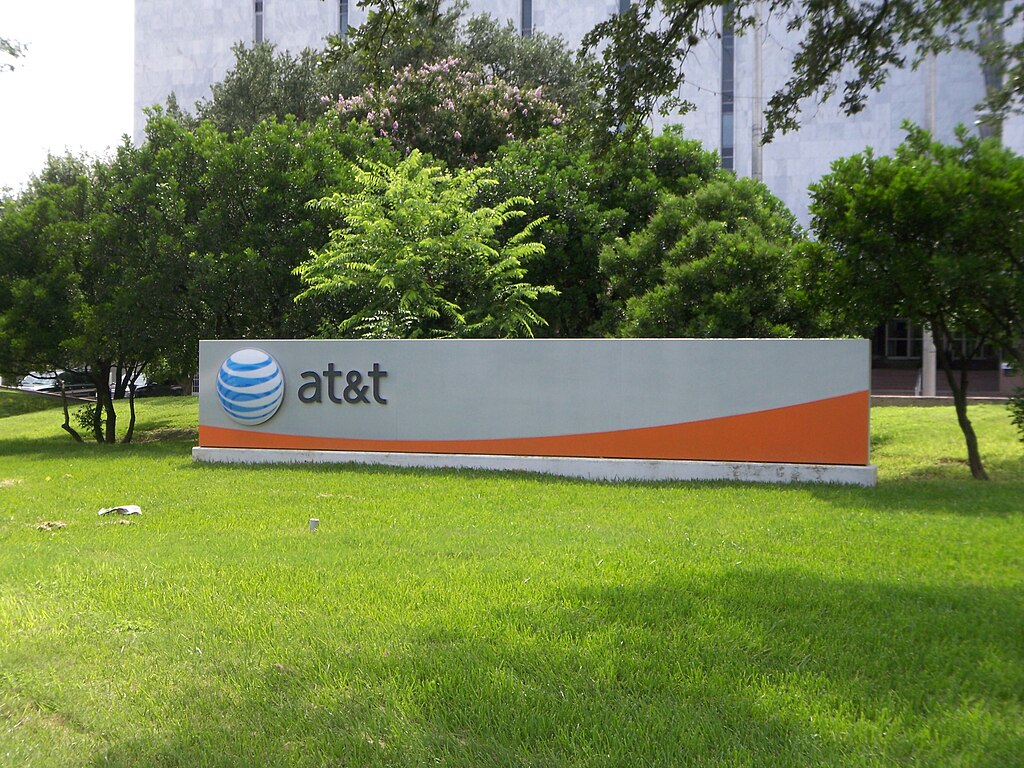
AT&T allowed us to conduct qualitative and quantitative research for them. The result was a key brand insight about the Worry Wort, a kind of subscriber who preferred AT&T over rivals Verizon and T-Mobile for a variety of reasons and tended to stick with AT&T for the long haul. The campaigns built around the Worry Wort allowed AT&T to reduce churn and fend off wireless competitors.
It’s doubtful that submitting the same data to AI would produce a finding as incisive as the Worry Wort. This is something to bear in mind if you’re a telecommunications brand seeking to thrive: human perspicacity counts.
There’s a kind of intelligence AI can’t reach. It has dimension, soul, and human inspiration. In the telecommunications business, we’d do well to remember this as we pour more datasets into the maw of AI. If you’re in the telecommmunications business and need human perspicacity, you might call Cascade Strategies. We can help you see things AI can’t see.
Featured Image: (Public Domain)
Top Image: Brownings at English Wikipedia

Sep

Pan Pacific Hotels allowed us to conduct qualitative and quantitative research for them. The result was a key brand insight about the Cosmopolite, a kind of guest who preferred Pan Pacific lodging even when other hotel offers were better. The campaigns built around the cosmopolite allowed Pan Pacific Hotels to weather economic downturns and pandemics, and even expand into key markets in Asia.
It’s doubtful that submitting the same data to AI would produce a finding as incisive as the Cosmopolite. This is something to bear in mind if you’re a hospitality brand seeking to thrive: human perspicacity counts.
There’s a kind of intelligence AI can’t reach. It has dimension, soul, and human inspiration. In the hospitality business, we’d do well to remember this as we pour more datasets into the maw of AI. If you’re in the hospitality business and need human perspicacity, you might call Cascade Strategies. We can help you see things AI can’t see.
Featured Image: Saksham Vikram
Top Image: Alix Lee






 info@cascadestrategies.com
 2032 Newport Way NW,
Issaquah, WA 98027 (425) 677-7430