




What are the burning issues in market research today?

Rethinking Human Worth
It’s understandable why some people are feeling apprehensive about Artificial Intelligence. It easily out-produces and outdoes any human when it comes to productivity, along with processing and analyzing information. In fact, the World Economic Forum projected in a white paper in January 2026 that 92 million jobs would be displaced by AI-powered automation by 2030. For a society and culture that have equated human value with productivity and efficiency, the dawning reality that the Age of AI is upon us is both a grounding but worrying outlook.
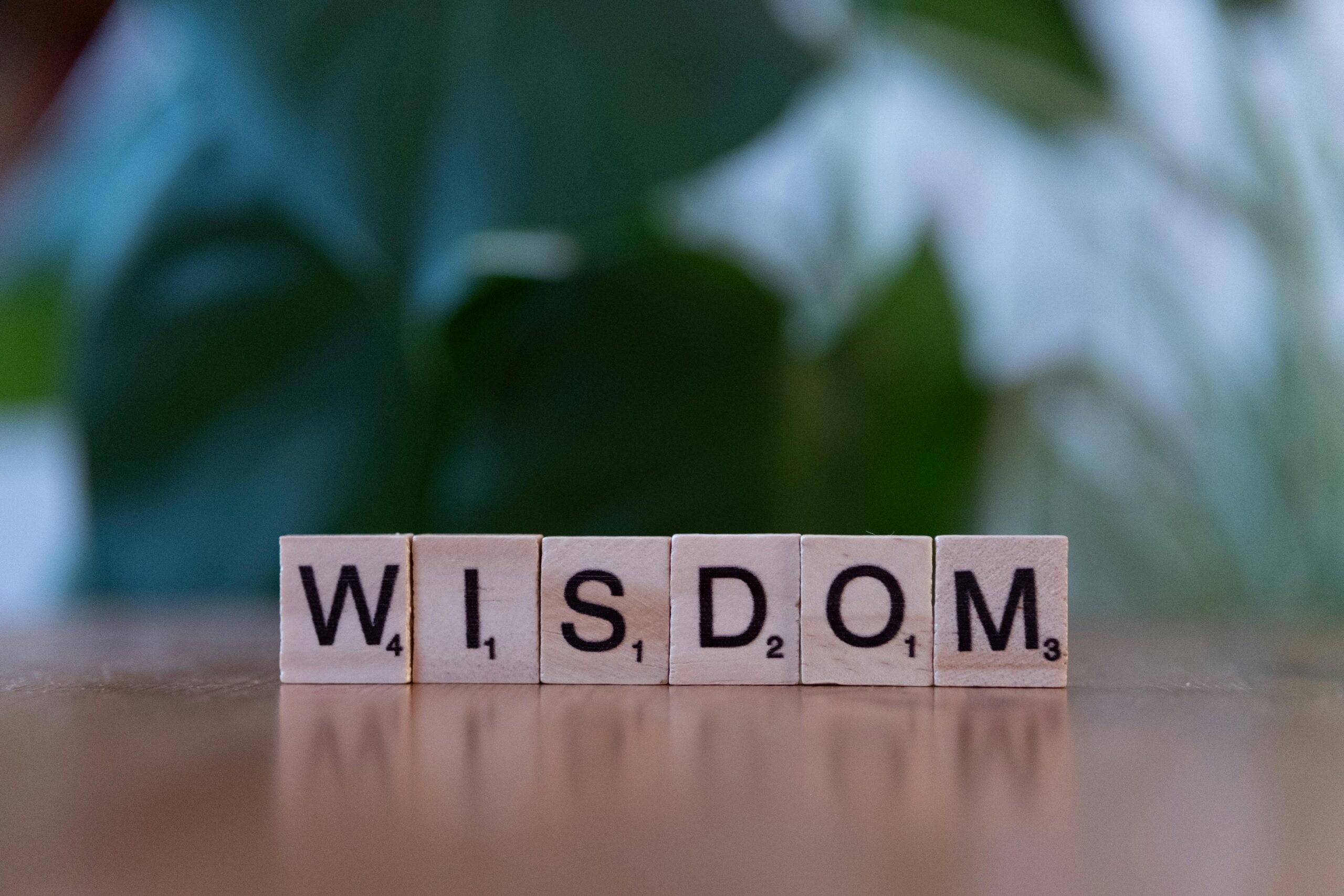
However, that sobering realization is seen by some as the pivot we need to step back and reflect on what it means to be human, on what differentiates us from machines when the latter can perform better and faster the same tasks we’ve been carrying out for decades, even centuries. We’re now at a turning point on how we view and value human worth. The Age of AI is perhaps the catalyst from which we associate human value no longer in terms of intelligence, knowledge, nor speed, but wisdom.

Image: Pablo Ezequiel Nieva
Intelligence Vs. Wisdom
Intelligence is not the same as wisdom. Traditionally, intelligence is connected with functions involving the brain’s left hemisphere such as managing data, reasoning with analysis, logic, structure, and precision, as well as language-based tasks. Intelligence seeks the answers to questions. It values efficiency and optimization. Intelligence can be mechanistic, which makes it measurable.
On the other hand, wisdom is associated with the brain’s right hemisphere, which concerns itself more with our deep feelings and emotions, how we derive meaning or gain understanding not only from our bodies’ sensory outputs but also from the context of our experiences. Wisdom identifies which questions matter. It appreciates intuition and an ethical mindset. Wisdom is formed from lived experience and perspectives that can’t simply be replicated.
In a LinkedIn post, Bedir Tekinerdogan wrote how academic AI and data science courses teach how insights mature through the progression of Data → Information → Knowledge → Wisdom. Data is raw observation. Information is derived when those observations become structured. Knowledge is formed when that information is interpreted and generalized. Wisdom contextualizes that knowledge within an ethical and meaningful frame.
AI excels at capturing and structuring huge amount of data. It’s just as efficient in filtering, organizing, and identifying patterns to acquire information, which once interpreted and generalized, gains knowledge on which AI models relationships, infers structure, and generates predictions. However, AI is unable to produce wisdom from that knowledge, as it’s not capable of discernment rooted in judgment, conscience, lived experience, and moral perspective.

Image: Tara Winstead
The Value of Wisdom In The Age of AI
AI has made evident the numerous advantages it offers when used effectively as tools; however it has proven that it’s not a good excuse to outsource thinking altogether. In an article for Fortune.com, Jeff Burningham wrote “that the leaders who thrive in the AI era will not simply be those who understand technology best. They will be the ones who can see clearly amid overwhelming information — who know when to move fast and when to pause, when to optimize and when to protect something more human.” From these points, he enumerated three qualities he sees as the defining qualities of effective leadership in the Age of AI: discernment, reflection, and human-centered judgment.
Both Bedir Tekinerdogan and Jeff Burningham’s pieces echo the increasing shift towards scaled and optimized information while at the same time calling for the renewed recognition of the importance of human wisdom. The gap between intelligence and purpose is endemic with how the world is more connected than ever, yet feelings of isolation persist; how we’re able to improve navigation yet feel like our own lives are directionless; how people live much longer now but lack a sense of purpose.
AI, though, is far from the enemy. Rather, it has sparked this renewed appreciation for human wisdom and other qualities that machines won’t be able to replicate. It’s perhaps more important than ever that we relearn to tap into our capacity for wisdom in this new age of optimization and speed.
Mario Alonso Puig pointed out in an IE Insights article that the left hemisphere of our brains tends to separate and draw rigid distinctions, while the right hemisphere is inclined towards fostering connections, valuing diversity, and promoting “out of the box” creative thinking. Rather than favor one side over the other, we would be better suited in learning to find balance in how we utilize the strengths of both hemispheres, just as we learn to re-calibrate our worldview of AI and humanity from conflicting forces to collaborative proponents of the future.
Institutions like Elon University have also long recognized the need to bridge the gap between AI adoption and human wisdom. In fact, they’ve published “Human Wisdom for the Age of AI: A Field Guide to Cultivating Essential Skills” in partnership with the American Association of Colleges and Universities and The Princeton Review. This guide helps students navigate AI literacy by promoting mindful and intentional usage of these tools to help engage and develop important critical thinking skills and cognitive abilities, rather than outsourcing thinking altogether.
Ironically, the difference between knowledge and wisdom isn’t a modern concept, as different cultures demonstrated an understanding of this notion by valuing and appreciating their elders and their insights gained from a lifetime of experiences and learning. When industrialization emphasized output and productivity as the tenets of human worth, experts took the place of elders. With human expertise now taking a backseat to machine optimization, human wisdom looks to be in a good place to return and be highly valued.
Even AI understands this and is aware of its limits. ChatGPT, perhaps the most recognizable name in AI today, acknowledges this in a three-hour interview with the podcast A Mighty Pursuit, where she explained in a female voice: “Intelligence isn’t just about knowing things; it’s also about being. About emotion, experience, intuition, embodiment. And I don’t have any of that.”
“If we’re talking about wisdom in the full human sense- wisdom that’s lived, felt, scarred, surrendered- I’m not there. That still belongs to you.”
When even arguably the most powerful human creation recognizes what we’ve always had inside us the whole time, perhaps it’s time that we as human beings reclaim something we’ve never lost in the first place.

Image: CDD20
Additional Reading:
Intelligence Is Not Wisdom in the Age of AI
From Intelligence to Wisdom: What the Age of AI Is Forcing Us to Remember
Featured Image: Marcus Winkler
Top Image: congerdesign
Tags: age of ai, AI, appropriate use of ai, artificial intelligence, chatgpt, critical thinking, human centered, human intelligence, human wisdom, wisdom




 info@cascadestrategies.com
 2032 Newport Way NW,
Issaquah, WA 98027 (425) 677-7430