


Aug
How Excellent Market Research Benefits Manufacturing Companies
jerry9789 0 comments artificial intelligence, Brandview World, Burning Questions


More than just an invaluable asset, market research is an essential tool to any company — or industry, for that matter. From identifying and tailoring your messaging towards your ideal customer with consumer research to understanding the competition and strategically positioning your company with competitor research, great market research grants you and your firm vital and actionable insights that would prove key to the success of your marketing efforts. In addition, excellent market research helps companies manage risks effectively and efficiently, as well as aid in measuring the progress and success of projects or even your company as a whole.
The manufacturing industry not only stands to benefit from high quality market research, it’s crucial to its continued growth, innovation and evolution, especially in an industrial landscape that’s continually transforming with technological advancements along with global, cultural and attitudinal shifts. From the steam and watered-power machines of the First Industrial Revolution to the expansion of network systems and electrification of the Second Industrial Revolution to the information technology focus of the Third Industrial Revolution (the Digital Revolution), the manufacturing industry’s evolution continues on in its latest iteration with Industry 4.0, harnessing modern and emerging technologies to facilitate the merging of the physical and digital realms.
And on that note, we take a look at 10 manufacturing industry trends today that exceptional market research can help manufacturers navigate and adapt to as the Industry 4.0 era unfolds.

Image: Livia Wong
1. Smart Factories
Perhaps the best representative of things to come with the Fourth Industrial Revolution, smart factories utilize Industry 4.0 technologies to streamline and improve operational efficiency, quality and maintenance while reducing errors and waste. Older machines are gradually giving way to newer counterparts built with onboard sensors, monitoring tools, interconnected systems and in some cases, machine learning capabilities.
With more and more manufacturing companies transitioning to automated facilities plus the decreasing costs to acquire sensors, software and equipment, manufacturers big and small are all the more incentivized to join the smart factory revolution — if they haven’t yet — to not only keep up with the competition and the changing times but also take advantage of the irresistible operational benefits.
2. Artificial Intelligence
AI has disrupted multiple industries, and manufacturing isn’t immune to it; in fact, it has openly and quickly embraced and adopted it, seeing all the tremendous advantages it brings with its data-crunching prowess and advanced decision-making insights to the core aspects of smart production, quality control, supply chain management, servicing and maintenance, along with enhancements to processes, products and services.
More and more manufacturing companies are finding success and are able to scale competitively when strategically leveraging AI in automating and streamlining their operations, especially when it’s combined with other contemporary technologies. But perhaps the best combination of them all is when AI is combined with human creativity and experience, opening doors for innovation and further advancements.
3. Digital Twins and Data-driven Predictive Maintenance
If smart factories are revolutionizing manufacturing operations, digital twin technology and data-driven predictive maintenance are transforming equipment maintenance and operational downtimes. By utilizing virtual replicas or “digital twins” of equipment and devices, manufacturers can simulate equipment performance under different scenarios and situations to gain valuable insights. These data-driven insights would help manufacturing companies anticipate or predict when an equipment would need servicing or maintenance, reducing or eliminating unexpected downtimes and equipment breakdowns. At the same time, maintenance costs are reduced, material cost savings are increased, and the usage or life cycle of the asset is optimized.
And digital twins aren’t limited to physical assets only, as they can also replicate systems or processes to test new ideas or optimize existing ones before applying any changes or updates to live production. The digital twins approach not only helps minimize resource consumption and waste, but also improves business decisions by backing them with data-driven insights.
4. Other Notable Industry 4.0 Technologies (AR/VR/Robotics)
Arising from the realms of gaming and entertainment, augmented reality (AR) and virtual reality (VR) have now begun revolutionizing manufacturing. Product design, quality control, maintenance and repairs, remote collaboration and even employee training — all these are being impacted and improved by the application of AR and VR technology.
Robotics may have been around longer than AR and VR but modern robots are far more advanced than their forerunners programmed for repetitive tasks. Thanks to AI and automation software, today’s robots are autonomous, collaborative, and far more capable of performing complex tasks and operations.
These technologies in conjunction with AI make it possible for manufacturing operations to be run remotely or without any operator onsite. And as these technologies grow popular to become widely used and accepted, we might even see more fully automated manufacturing facilities called “dark factories” be developed in the near future.
5. Sustainability and Carbon Neutrality
No other industry is perhaps under greater pressure to pursue sustainable processes and carbon-neutral practices than manufacturing. Contracts with governments and institutions and eventually commercial clients require compliance with sustainability efforts while more and more consumers are supporting reputable, sustainable brands.
The manufacturing industry itself is advancing sustainability efforts by developing and employing green software to aid with carbon neutrality, waste reduction, and energy consumption optimization. Renewable energy integration in physical locations is also being embraced, while cloud infrastructure solutions and carbon capture technology are being viewed for their potential. Working toward sustainable practices and carbon neutrality isn’t without its own rewards for the business, as it’s been found that eco-conscious manufacturing companies are able to significantly reduce costs and improve efficiency with their sustainability efforts over time.
6. Reshoring
Reshoring refers to returning production operations back to the manufacturing company’s home country from overseas locations. This trend was a result of recent global events disrupting supply chains. It benefits the manufacturer with shorter supply chains, better quality control, faster market delivery, domestic economic boost, and improved sustainability efforts.
However, reshoring isn’t a decision a manufacturing company should take lightly, as one would need to factor in labor costs, skill, infrastructure, and more, as smaller-scale firms might find it more costly to operate domestically than overseas.
7. Decentralized Manufacturing
Another approach to improving supply chain resilience from disruptions is decentralized manufacturing, which is the distribution of production activities across multiple locations in the form of microfactories. Additional benefits of decentralized manufacturing include reduced logistics costs and quicker response times to local market demands.
While the coordination of multiple microfactories and achieving standardization across all sites may prove to be challenging, Industry 4.0 technologies can aid in making decentralized manufacturing more accessible and manageable through improved transparency and responsive production models.
8. Tapping into B2C
With the ever-growing popularity of e-commerce, manufacturing companies can now bypass the traditional lines of retailers and distributors and sell directly to the end consumer. Smart factories, 3d printing and additive manufacturing also make it possible to offer customized products based on a customer’s preferences. The advent of new manufacturing technology or the evolution of existing ones would only open up more opportunities for enterprising manufacturers looking to connect further with consumers.
9. Cybersecurity
The manufacturing industry’s increasing digitization has made it an irresistible target for cybercriminals, exploiting vulnerabilities with cyberthreats and attacks ranging from ransomware to industrial espionage or even supply chain and/or operational disruption. It’s no surprise then that cybersecurity has joined the elite group of paramount concerns for any manufacturing company.
Measures include multi-layered security, secure-by-design, zero-trust architecture, AI-driven threat detection, advanced encryption, and regular updates and patches, as well as employee cybersecurity training. Cybersecurity is more than just data protection or an IT concern now for manufacturing companies as it safeguards their production, finances, integrity, and reputation.
10. The Workforce of Industry 4.0
In spite of all the exciting technologies emerging in the Fourth Industrial Revolution, the manufacturing industry is experiencing widening skills gaps and labor shortages. These difficulties could translate to a loss in revenue of $1 trillion if approximately 2.1 million jobs aren’t filled in by 2030.
To address these challenges, manufacturing companies could start with reviewing all of their production processes from the ground up and assessing areas that could be improved by a highly skilled and competent workforce. Yes, the manufacturing industry is moving towards automation and advanced technologies but it can’t truly innovate without human creativity and experience.
Manufacturing companies are planning to offer higher wages by at least 3%. At the same time, they’re investing in training programs to reskill or upskill existing employees for the Industry 4.0 work environment. Incorporating new manufacturing technologies like AI and AR in these training programs can help employees not only learn faster, but also give them familiarity and first-hand experience with these digital trends. The same technologies can also be deployed for improving employee health and safety at the workplace.
Other approaches that manufacturing companies can consider taking range from partnering with local educational institutions in creating curriculums tailored for manufacturing careers, diversifying the recruitment pool, and creating appealing work environments which offer flexible schedules, potential promotions, and career development.

Image: InWay
How Cascade Strategies Can Help Manufacturing Companies with Advanced Market Research
Hewlett-Packard wanted to discover what feature-price combinations in high-frequency oscilloscopes would optimize profit. We conducted an advanced conjoint study followed by AI-based modeling to evaluate sales scenarios. Out of hundreds of attributes, we found the qualities below to be most salient. Using the most salient attributes as predictive vectors, we developed an AI model to determine the unique price-feature combinations that would produce the most profit and presented the top 3 to Hewlett-Packard.
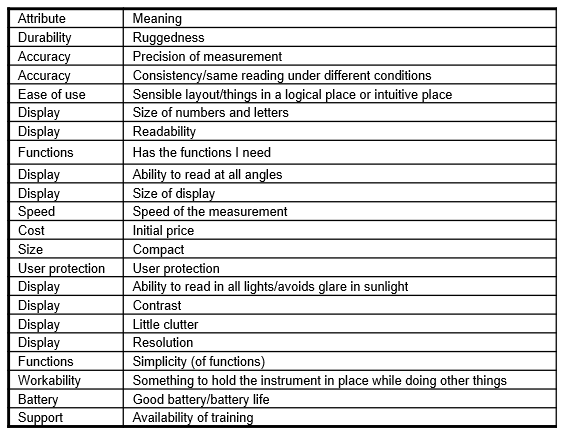
We’ve highlighted 10 manufacturing trends shaping the future of the manufacturing industry in this selection but there are actually more out there that we didn’t touch on. And as new technologies arise, existing ones improve, and other industry changes or shifts happen, more trends are sure to emerge.
Regardless of trends, you can be sure to count on market research to help you determine the best approach to leveraging new technologies or guide business decisions to ensure your manufacturing company stays competitive and relevant. Would it be beneficial or costly for your company to go with a dark factory over a smart factory? Which of your AI-driven production processes would benefit from human supervision and input? Are your sustainability efforts being seen and appreciated by your consumer base or do you need to do more?
Between reshoring and decentralized manufacturing, which one would work best for your company? Are you able to expand into B2C? Are your training programs effective in making your employees understand and uphold cybersecurity commitments?
As with any AI-powered or data-driven Industry 4.0 technology, the high quality market research Cascade Strategies provides grants valuable and actionable insights into the operations, perception, and potential of your manufacturing company. If you would like to find out more about how Cascade Strategies can help your manufacturing company thrive in the Fourth Industrial Revolution, please contact us here.
Featured Image: Hyundai Motor Group
Top Image: Foto-Rabe

Jun
How Great Market Research Can Help Food and Beverage Manufacturers
jerry9789 0 comments Brand Surveys and Testing

How do you navigate a market landscape as vast and dynamic as the Food and Beverage Manufacturing industry? How do you introduce your new product or make it stand out from the competition? And how do you keep your offerings or your company itself relevant amidst the fast-changing times?
These questions might make one think that thriving let alone venturing into the Food and Beverage Manufacturing industry would prove to be formidable and intimidating pursuits. But that wouldn’t necessarily be the case if one leverages great market research in their endeavors in Food and Beverage Manufacturing.
From resonating with the right audience to competitively pricing your product, from adapting new and emerging technologies to innovating in an ever-shifting industry, market research would prove key to the foundation of strategies and achieving the goals of any enterprising Food and Beverage Manufacturer.

Copyright: Gustavo Fring
Benefits of Market Research for Food and Beverage Manufacturers
One of the largest and most saturated industries in the US, Food and Beverage Manufacturing could prove to be challenging and daunting for startups to enter and for new products to be introduced. That is, unless plans and business decisions are informed and backed by data gathered from market research which utilizes one or a combination of research methods which includes qualitative and quantitative research, feasibility studies, focus groups, interviews, and surveys.
Great market research allows upcoming products to find their optimal customer or target audience. This type of research allows manufacturers to tailor their marketing and advertising to resonate with their ideal consumer versus a blanket approach taking aim at multiple customer segments all at the same time, which might be more costly and inefficient. With a better understanding of their target customer through market research, Food and Beverage Manufacturers could improve not only their product’s reception but also their chances of getting their own share of the market.
The Issue of Feasibility
You might even say that market research could inform manufacturers if there is even a market for a particular product. Feasibility studies and the like would attest whether there is money to be made with a proposed product which you could also present to interested investors.
In addition, market research not only provides insights into consumer behavior but also of trends and opportunities for growth, improvement and innovation. Manufacturers who are able to identify these opportunities and develop the appropriate products or solutions could greatly benefit for being first in line, discovering and capturing niche markets, as well as gaining an edge over their competition. Identifying or forecasting consumer and market trends allows Food and Beverage Manufacturers room to pivot with existing products, either by increasing the production and/or promotion of a selection that’s becoming popular or mainstream, or pull back efforts on one expected to be in decline, possibly exploring ideas to improve it or shelve it until conditions become favorable.
What Product Attributes Should Be Emphasized?
Speaking of competitive edge, market research allows manufacturers to recognize the strong points of their products in comparison to their competitor’s offerings, enabling their marketing and advertising efforts to highlight those advantages. By the same token, insights on what a competing product offers could be helpful in assessing whether it’s worthwhile to emulate the same qualities or counter it with a better solution. These insights in combination could help determine the ideal price point for a product to strike a balance between gaining revenue and competitive pricing.

Copyright: piviso
Continental Mills Case Study by Cascade Strategies
Continental Mills was looking to introduce new package designs for their line of baking and pancake mixes. Cascade Strategies conducted a study for them, interviewing respondents who were current buyers of baking and pancake mixes. Half were shown the current packages and the other half were shown the proposed designs. They were told that they have $10 to spend and were asked to browse and buy as normal. Their eyes and brainwaves were tracked throughout the shopping process.
We found that by deploying the new designs, Continental Mills would be losing around $19 million. The existing package designs exhibited a harmony among the visual elements that was not replicated by the new designs. The current packages were well-liked, and this was demonstrated by consumers responding positively with their brainwaves and wallets at higher levels than with the new package designs. The visual harmony was consistent throughout the entire current line of packaging.

Copyright: ninthgrid
Growing Your Food and Beverage Manufacturing Business with Market Research
We’ve touched on the benefits of market research for startups and new products, but it doesn’t cease being an important asset to a Food and Beverage Manufacturing company once they’ve gotten off the ground. In fact, market research is just as important to any established company for remaining relevant amidst shifts and trends in the market and consumer behavior, as well as up-and-coming competitors and new technologies.
Customer loyalty and retention might not only be as important but possibly more vital than new consumer acquisition, as existing customers have already consistently endorsed your product over time. Recognizing what they like about your product or what makes them stick with you could be essential in how your offering evolves or your selection expands, gaining new customers without turning away loyal ones. Such insights could also influence how creative you can get with rewarding customer loyalty, chief of which is how and when you would launch relevant promotions or marketing. Think of a buy-one-get-one promotion to counter the introduction of a competing product into the market, or advertisements thanking your most loyal consumers when celebrating milestones.
Health Consciousness
Another thing to consider is the increasing popularity of healthier product selections. Market research can help you learn whether a health-conscious version is good enough to replace your primary product or if it needs to be offered as a separate line. Your marketing team might also be interested in finding out if your ideal consumer buys your product for health benefits to warrant emphasizing this in your advertising.
This also extends to sustainable practices. While this would score well with Gen Z, this isn’t only for marketing purposes. Market research can help you locate the ideal location where not only you have a competent workforce and cost-effective resources to tap into, but also local regulations that support and enable sustainable production practices.
Regional Flavor
Another interesting benefit that market research gives Food and Beverage Manufacturing companies is the opportunity to diversify or introduce flavors or cuisines from a different region. It can either stem from the idea of introducing a novel new product or identifying a growing or trending preference towards a particular regional taste or selection.
And amid the pressures of e-commerce (boosted by the pandemic), DTC, omni-channel shopping, and AI, market research is as relevant as ever to any company with regard to the viability of adapting new technology, expanding shopping and distribution options, and even the prospect of globalization.

Copyright: stokpic
Food and Beverage Manufacturing Market Research with Cascade Strategies
Whether you’re a startup looking to claim your share of the market or an established company who wishes to stay relevant by launching new products or adapting a new way of managing your Food and Beverage Manufacturing business, you can’t go wrong partnering with an esteemed and experienced market research team like Cascade Strategies. With 35 years of market research excellence serving leading US and international companies like the aforementioned Continental Mills, we’re not only well equipped with a wide array of research methods but we’ve remained on the cutting edge of market research with a potent combination of leveraged AI technology and a high level of excellent human thinking. Contact Cascade Strategies today to learn how we can help you navigate the massive and ever-changing market landscape of the Food and Beverage Manufacturing with a roadmap built on high quality and data-driven market research!
Featured Image Copyright: Gustavo Fring
Top Image Copyright: Rulo Davila

Jun
Kyle Byers of Exploding Topics has written recently about nine key trends in the CPG industry. We’d like to focus on those nine trends below, add one of our own, and talk about how market research has responded to these trends.
From food and drinks to apparel and cosmetics, consumer packaged goods (CPG) are a vital part of everyday life for most consumers and households. Since these products are mostly disposable, there is a regular need and consistent demand for replenishment or replacement, forming the basis for a competitive environment for all brands.
The CPG market has significantly and steadily grown despite the competition and even more so with the COVID-19 pandemic. It was valued at $2.06 trillion in 2021 and with a compound annual growth rate (CAGR) of 3.5%, it is estimated to reach $2.8 trillion by 2030.
In addition to the pandemic, new technologies and consumption habits have contributed to the rapidly changing face of the CPG industry. From direct to consumer (DTC) to sustainability to product personalization, we’ll take a closer look at 10 of the most important trends impacting the CPG industry right now.

1. Legacy CPG Companies Join DTC
DTC online sales growth in 2022 is estimated at $138.03 billion, so you can understand why CPG industry stalwarts couldn’t ignore the DTC wave any longer, joining the trend three ways. First by acquiring competitors, like Unilever who counts Dollar Shave Club, Schmidt’s Naturals and UK-based Graze among its many DTC acquisitions since 2015. Second, they are launching entirely new brands, like Procter & Gamble’s EC30 which is an eco-oriented brand of dissolvable, solid-form soaps and cleaning products. And thirdly, by launching DTC sites like PepsiCo’s PantryShop.com and Snacks.com. These sites went up during the Coronavirus pandemic and PepsiCo nearly doubled their DTC sales in Q3 2020.
2. CPG Startups Emerge to Make Their Mark
Without a middleman and the need for retail shelf space, the DTC business model fosters competition. Many DTC startups use a subscription model to generate steady and recurring revenue, allowing them to take a bite out of the market at the expense of traditional CPG brands. For example, Gillette saw its 70% share of the US razor market go down under 50% within a decade due to competition from Dollar Shave Club and Harrys.
3. More Retailers Launch Private Label Brands
Availability issues during the pandemic have partly contributed to the popularity of private-label products. With 65% of shoppers saying they’ll switch brands if prices are too high, being an affordable alternative also helps private-label brands gain ground in the market. Think Amazon’s private-label clothing brand Goodthreads, which is competing against big brands H&M, Levi’s, and Uniqlo. Better margins and direct control over product development have also convinced retailers like Walmart and Kroger to launch their own consumer brands.
4. Faster and Easier Delivery Than Ever Before
With the pandemic pushing e-commerce into overdrive, access to faster and easier delivery options is becoming a key point in purchasing decisions, according to 68% of shoppers in a recent survey. 85% of online shoppers say they will search for someplace else if the delivery time is too long, while 30% of consumers expect same-day delivery. This need for speed has given rise to dedicated fast-delivery CPG retailers like GoPuff who are offering to deliver not in days or even hours but in minutes.

Copyright Pixabay (Pexels)
5. Focus on The Omni-Channel CPG Shopping Experience
More and more CPG brands and retailers are pushing for omni-channel shopping, allowing a smooth and seamless purchasing experience across different devices, or even between in-store and online. To illustrate: Sephora enhanced in-store experience by letting customers access their online shopping lists called “Loves” on large screens inside stores with the help of in-store tablets. Compared to single-channel brands, CPG companies that utilize at least three retail channels have shown a 287% higher purchase rate.
6. Expanded Omni-Channel CPG Marketing
CPG companies are also leveling up their marketing with a more omni-channel approach. TV ads, product placements, PR, and digital marketing methods like PPC ads, which have proven their effectiveness time and time again, are now joined by the new kid on the block: influencer marketing. Even with as few as 1,000 social media followers, “micro” and “nano” influencers are able to deliver results for CPG brands tapping into these smaller, more focused niche experts.
7. Sustainability and Clear Brand Values Are More Important Than Ever
Another thing that the pandemic accelerated is the rise of green consumerism. Many consumers, mainly Gen Z, now avoid brands that don’t align with their stance on the environment and other sustainability issues. 53% of Internet users have expressed intentions to switch products or services if a company violates their personal values or they weren’t sustainability-focused.
8. Self-Care Product Demand Is Rising
The pandemic also brought to the fore holistic self-care, where consumers use multiple products to optimize their health and wellness. Skincare products are now outselling makeup, thanks to millennials who spend more on self-care than any previous generation, and CPG brands like CeraVe and DRMTLGY who have jumped at this opportunity.
Products containing cannabidiol, also known as CBD, were not legal nationwide in the US until 2018. Now, CBD products are a rapidly growing part of the self-care category, with sales at $4.6 billion in 2020 and expected growth of over $16 billion in 2026.
9. Growing Popularity of Product Personalization
Offering a personalized experience through product quizzes can boost e-commerce conversion rates while building direct, one-to-one relationships with customers. This was the goal behind beauty brand Tatcha offering personalization via its Ritual Finder tool.
In fact, 71% of consumers expect personalized interactions according to McKinsey. Conversely, 76% get frustrated when they don’t get them. 60% of consumers say they’ll become repeat customers after a personalized shopping experience.

Copyright Polina Tankilevitch
10. Gen Z Is Becoming a Major Part Of The Consumer Market
We’ve hinted this earlier, but this trend is just as impactful as the others, especially with the $143 billion of spending power that allows Gen Z to make up 40% of the entire global consumer market. With the shift to digital commerce, companies need to find creative and effective ways to tap into this massive demographic group and understand their buying patterns, especially with regard to social media. Did you know that 97% of Gen Z purchasing decisions are heavily influenced by social media, with 48% of consumers now likely to purchase directly from TikTok?
How Market Research Has Responded to These Trends
Based on these trends, we can assume the CPG market is moving into a personalized and multi-channel direction where leading brands are recognized not only for their competitive price points but also for their value propositions. There are four key ways in which the Market Research industry has responded to these trends and provided newer and more incisive tools for understanding consumer behavior.
1. The Shift from Perceptual Research to Transactional Research
Pandemic restrictions have long been lifted and brick-and-mortar locations have reopened, but there’s no denying that consumers have embraced e-commerce and the convenience it offers. Consumers will still appreciate the opportunity to test products in person with in-store shopping, but when there isn’t such a necessity, e-commerce becomes the go-to sales channel. This is especially true for those who have already established loyalty to a particular brand. Following this trend, there’s been a seismic shift away from perceptual research dealing with the in-store experience to customer research dealing mainly with degree of satisfaction at certain touchpoints in the e-commerce funnel.
Brand and Insights Managers increasingly seek hard metrics to support specific e-commerce initiatives, including product depictions on small and large screens, comparative text descriptions, active displays involving motion, sound, and animation, features such as reviews, promotion codes, side-by-side comparisons, visual try-it-on-yourself options, and options for shipping, group discounts, buy-now-pay-later offers, and repeat-purchase and subscription-purchase offers. While perceptual research can guide them in a general way, the degree-of-satisfaction metrics at these touchpoints in the shopping experience deliver more hard value to the decision maker who is tasked with determining the effectiveness of e-commerce marketing methods.
2. From Qualitative to Quantitative Methodologies
Another development is the shift away from common qualitative methodologies to quantitative methodologies. For example, years ago there was much more exploration of the spatial shopping experience via in-person focus groups, shop-alongs, visual diaries, ethnographies, and the like. A good deal of that has transitioned to quantitative research using direct metrics such as scalar degree-of-satisfaction measures delivered via web and text.
Fundamentally, the need-to-know among contemporary Brand Managers and Insights Managers is not so much “how does my brand’s expression attract consumers?” as it is “how satisfied are consumers with their experiences with my brand?” The first concern was well served by a variety of qualitative methodologies. While it’s still an active concern, it has declined somewhat, while the second concern has become white-hot. Quantitative methodologies on the whole do a better job of serving this second concern than qualitative methodologies do, especially given that brand “experiences” in the current day are less spatial and more virtual. This makes it easier to ask a consumer a transactional question such as “how did it go for you?” while the consumer’s mind is still fresh on the subject.
3. Less Packaging Research
There was a 30-year fascination – even obsession in some cases – with intriguing methodologies in packaging research, pioneered by big packaged goods companies like P&G, PepsiCo, Unilever, etc. These included eye tracking, neurometrics, GSR measurement, EKG measurement, facial coding, Virtual Reality and Augmented Reality simulations, million-dollar “cave” immersive environments, and more. These methodologies are still very much alive, but their application is different. At one time they were widely applied to virtually any inquiry associated with packaging or any stage in the PLM journey: product ideation, prototyping, functional testing, price/value research, comparative attribute research, virtual or physical shelf testing, test marketing, advertising, and even compliance. Now the applications are more narrowly focused on specific research outcomes, and maybe that’s a good thing.
For example, the fragrance people still love biometric methods, and the website testing people still love eye tracking. The people doing that research have specific research outcomes in mind, and these outcomes are often metric rather than perceptual. Are psychic arousals produced by certain aromas? Where do the eyes go when looking at a web page? These questions can be answered metrically via the biometric data. And these are experimental venues where the brain-body response can legitimately be expected to be driven by environmental stimuli – at least enough to be measured by instruments.
As a result, there’s less packaging research in the packaged goods business. The truth is that there’s less keen interest among Brand and Insights Managers in whether the packaging is compelling in a spatial retail environment. There’s more interest in the transaction itself. Brand and Insights Managers want to learn less about the motivations and behaviors involved in wanting the product and more about the motivations and behaviors involved in buying the product.
4. Systems as a Source of Insight
There is also now a greater focus on systems as a source of insight. For years, market research was the primary source of brand insight, so humans were involved by definition. Now the dominant sentiment is that insights come from machines, and humans tend the machines.
Marketing decision-makers are often heavily engaged in the determination of which analytics platform(s) will be implemented at their company, installing the platform and training users, maintaining the security of that platform, licensing issues, system upgrades, patches, maintenance advisories, hardware issues, and more. None of this has anything to do with deriving insights for the brand.

Copyright PhotoMIX-Company
The thought pattern here is that this time is well spent because insights arise from machines, not human effort. A human-focused effort to produce brand insights is still occasionally used, but it’s sort of like a landline phone: interesting but not contemporary.
Brand and Insights Managers in the current day have a passing interest in human-focused market research when the machines cannot produce the insight or do a poor job of it. An example would be the development of a vibrant persona for the brand, or a comprehensive market segmentation scheme involving all competitive brands. Systems and platforms can actually do this (including AI-assisted systems and platforms), but their outcomes are invariably suboptimal. The systems are recursive, and they therefore regurgitate the best-available summarizations of the data inputs they receive. Since they don’t have the intuitive, interpretive, and synthesis-building power of the human brain (especially the right brain), they cannot extrapolate to the level of excellence in their outcomes. In other words, they render mediocrity permanent.
It takes a brain strain – a smart person or two striving with higher intuitive/interpretive layers of thinking and understanding to discover solutions that cannot be reached by simply summarizing human experience on a topic – to produce excellence in these outcomes. The greater unanswered question is whether Brand and Insight Managers want excellence. These managers may be a little more system- and process-driven in their thinking, and they therefore may prefer a large volume of mediocre solutions rather than a single solution at the level of excellence.
How We Approach These Issues at Cascade Strategies
There’s currently a raging debate about the appropriateness and utility of applying AI instruments, especially ChatGPT, to marketing questions typically answered by market research and discussed in this article. Our point of view on this topic can be summarized by the term “Appropriate Use.”
Clearly, there’s big first-party data involved with these CPG trends, especially with DTC. While AI-powered analysis and interpretation of this big data can efficiently and quickly produce objective and accurate results, there is a space that AI is unable to touch and thus falls short of effectively leveraging data to make informed decisions. This area is where the intuitive, interpretive, and synthesis-building capacities of the right brain excel. Here data-driven decision-making could potentially access a different yet extraordinary set of insights, themes and recommendations anchored by human values and experience.
But sophisticated solutions at this level – the level of excellence – might remain undiscovered since machines don’t have the ability to relate to the data on an intuitive and interpretive level. A more enlightened “Appropriate Use” concept, which elevates the role of human inspiration and agency, could lead to more innovative and creative ideas about how CPG companies can optimize operations, forecast sales, develop products, enhance marketing strategies, focus on the most profit-optimal consumers, and develop the most compelling messages for those consumers.
For 33 years Cascade Strategies has demonstrated the capacity to maintain this kind of machine-versus-man balance for leading worldwide companies and thus produce excellence in thinking and outcomes. Please see examples of our higher thinking for clients at https://cascadestrategies.com.







 info@cascadestrategies.com
 2032 Newport Way NW,
Issaquah, WA 98027 (425) 677-7430