


Jun
How Great Market Research Can Help Food and Beverage Manufacturers
jerry9789 0 comments Brand Surveys and Testing


How do you navigate a market landscape as vast and dynamic as the Food and Beverage Manufacturing industry? How do you introduce your new product or make it stand out from the competition? And how do you keep your offerings or your company itself relevant amidst the fast-changing times?
These questions might make one think that thriving let alone venturing into the Food and Beverage Manufacturing industry would prove to be formidable and intimidating pursuits. But that wouldn’t necessarily be the case if one leverages great market research in their endeavors in Food and Beverage Manufacturing.
From resonating with the right audience to competitively pricing your product, from adapting new and emerging technologies to innovating in an ever-shifting industry, market research would prove key to the foundation of strategies and achieving the goals of any enterprising Food and Beverage Manufacturer.

Copyright: Gustavo Fring
Benefits of Market Research for Food and Beverage Manufacturers
One of the largest and most saturated industries in the US, Food and Beverage Manufacturing could prove to be challenging and daunting for startups to enter and for new products to be introduced. That is, unless plans and business decisions are informed and backed by data gathered from market research which utilizes one or a combination of research methods which includes qualitative and quantitative research, feasibility studies, focus groups, interviews, and surveys.
Great market research allows upcoming products to find their optimal customer or target audience. This type of research allows manufacturers to tailor their marketing and advertising to resonate with their ideal consumer versus a blanket approach taking aim at multiple customer segments all at the same time, which might be more costly and inefficient. With a better understanding of their target customer through market research, Food and Beverage Manufacturers could improve not only their product’s reception but also their chances of getting their own share of the market.
The Issue of Feasibility
You might even say that market research could inform manufacturers if there is even a market for a particular product. Feasibility studies and the like would attest whether there is money to be made with a proposed product which you could also present to interested investors.
In addition, market research not only provides insights into consumer behavior but also of trends and opportunities for growth, improvement and innovation. Manufacturers who are able to identify these opportunities and develop the appropriate products or solutions could greatly benefit for being first in line, discovering and capturing niche markets, as well as gaining an edge over their competition. Identifying or forecasting consumer and market trends allows Food and Beverage Manufacturers room to pivot with existing products, either by increasing the production and/or promotion of a selection that’s becoming popular or mainstream, or pull back efforts on one expected to be in decline, possibly exploring ideas to improve it or shelve it until conditions become favorable.
What Product Attributes Should Be Emphasized?
Speaking of competitive edge, market research allows manufacturers to recognize the strong points of their products in comparison to their competitor’s offerings, enabling their marketing and advertising efforts to highlight those advantages. By the same token, insights on what a competing product offers could be helpful in assessing whether it’s worthwhile to emulate the same qualities or counter it with a better solution. These insights in combination could help determine the ideal price point for a product to strike a balance between gaining revenue and competitive pricing.

Copyright: piviso
Continental Mills Case Study by Cascade Strategies
Continental Mills was looking to introduce new package designs for their line of baking and pancake mixes. Cascade Strategies conducted a study for them, interviewing respondents who were current buyers of baking and pancake mixes. Half were shown the current packages and the other half were shown the proposed designs. They were told that they have $10 to spend and were asked to browse and buy as normal. Their eyes and brainwaves were tracked throughout the shopping process.
We found that by deploying the new designs, Continental Mills would be losing around $19 million. The existing package designs exhibited a harmony among the visual elements that was not replicated by the new designs. The current packages were well-liked, and this was demonstrated by consumers responding positively with their brainwaves and wallets at higher levels than with the new package designs. The visual harmony was consistent throughout the entire current line of packaging.

Copyright: ninthgrid
Growing Your Food and Beverage Manufacturing Business with Market Research
We’ve touched on the benefits of market research for startups and new products, but it doesn’t cease being an important asset to a Food and Beverage Manufacturing company once they’ve gotten off the ground. In fact, market research is just as important to any established company for remaining relevant amidst shifts and trends in the market and consumer behavior, as well as up-and-coming competitors and new technologies.
Customer loyalty and retention might not only be as important but possibly more vital than new consumer acquisition, as existing customers have already consistently endorsed your product over time. Recognizing what they like about your product or what makes them stick with you could be essential in how your offering evolves or your selection expands, gaining new customers without turning away loyal ones. Such insights could also influence how creative you can get with rewarding customer loyalty, chief of which is how and when you would launch relevant promotions or marketing. Think of a buy-one-get-one promotion to counter the introduction of a competing product into the market, or advertisements thanking your most loyal consumers when celebrating milestones.
Health Consciousness
Another thing to consider is the increasing popularity of healthier product selections. Market research can help you learn whether a health-conscious version is good enough to replace your primary product or if it needs to be offered as a separate line. Your marketing team might also be interested in finding out if your ideal consumer buys your product for health benefits to warrant emphasizing this in your advertising.
This also extends to sustainable practices. While this would score well with Gen Z, this isn’t only for marketing purposes. Market research can help you locate the ideal location where not only you have a competent workforce and cost-effective resources to tap into, but also local regulations that support and enable sustainable production practices.
Regional Flavor
Another interesting benefit that market research gives Food and Beverage Manufacturing companies is the opportunity to diversify or introduce flavors or cuisines from a different region. It can either stem from the idea of introducing a novel new product or identifying a growing or trending preference towards a particular regional taste or selection.
And amid the pressures of e-commerce (boosted by the pandemic), DTC, omni-channel shopping, and AI, market research is as relevant as ever to any company with regard to the viability of adapting new technology, expanding shopping and distribution options, and even the prospect of globalization.

Copyright: stokpic
Food and Beverage Manufacturing Market Research with Cascade Strategies
Whether you’re a startup looking to claim your share of the market or an established company who wishes to stay relevant by launching new products or adapting a new way of managing your Food and Beverage Manufacturing business, you can’t go wrong partnering with an esteemed and experienced market research team like Cascade Strategies. With 35 years of market research excellence serving leading US and international companies like the aforementioned Continental Mills, we’re not only well equipped with a wide array of research methods but we’ve remained on the cutting edge of market research with a potent combination of leveraged AI technology and a high level of excellent human thinking. Contact Cascade Strategies today to learn how we can help you navigate the massive and ever-changing market landscape of the Food and Beverage Manufacturing with a roadmap built on high quality and data-driven market research!
Featured Image Copyright: Gustavo Fring
Top Image Copyright: Rulo Davila

Jul
How to Market Your Software Company in 5 Steps
jerry9789 0 comments Brand Surveys and Testing, Brandview World, Burning Questions
According to Investopedia, only 80% of startups survived after one year, with reasons for failure ranging from money running out, being in the wrong market, lack of research, bad partnerships, ineffective marketing, and not being an expert in the industry. As a counterpoint, they cite activities such as setting goals, accurate research, loving the work, and not quitting as ways a small business can avoid failing.
Is it really that simple? Maybe not, but here at Cascade Strategies we believe it’s at least reducible to a clear step-by-step process. Here are our ideas — 5 steps on how to market your software company effectively.
1. Identify brand, goals and what makes your company unique
The first step in marketing a software (or company in general) is to determine your strategy by identifying and building around your goals. In addition to generating revenue, are you planning to establish a niche in your market? Is it also in your plans to continually develop your software through organic user feedback? You will also need to come up with a brand that not only aligns with the goals you come up with, but also helps you stand out from the competition. With thousands of software companies in the market, you’ll need to highlight what makes your software unique and what new or different property you bring to the table. A clear identity not only makes your brand more recognizable, but also makes it more strongly connected to the values you represent, leading to the formation and promotion of your reputation.
2. Identify target audience, especially the decision maker
Part of a marketing strategy is recognizing not only who you should be selling to but also who will most likely convert to a loyal customer. Through demographics, psychographics and segmentation, you’ll be able to form or identify your ideal customer and thus focus your marketing efforts on this particular client type. However, it works a little differently with Software as a Service (SaaS), since you will often need to appeal to a specific decision maker at a company (i.e., a specific title) who will have the strongest hand in choosing your particular software over competitors. You can confront this problem by not only flaunting what your software does best but also extolling the benefits it brings to the workplace in terms of productivity and efficiency.
3. Create a strong online presence (website, social media, SEO, email marketing, influencer marketing, video marketing)
As a software company, it’s vital that online marketing be part of your strategy. You can utilize traditional marketing, but online marketing offers more advantages when it comes to product promotion and customer engagement. For starters, it’s more cost effective and gets faster results. Webfx.com goes into detail regarding the advantages online or digital marketing possesses over traditional channels here.
Your website will need to be optimized for both SEO (so you rank in search pages) and function (so you effectively represent the quality of your brand). A slow or glitchy software company website won’t bode well for the performance of the product you’re selling. Keep your websites and social media pages up-to-date and active as much as possible to make them welcoming and inviting for customer interaction and feedback. Try to maintain your online presence on more than one social media page. Teamdeck said it best on the importance of social media: If a company doesn’t exist on social media, it looks suspicious.
Collaborate with influencers with similar values who have a following matching your intended audience. Reputable influencers can greatly help boost product sales and trust by lending their credibility to your offering. And don’t forget coming up with relevant and appealing videos: the essential message of lengthy prose literature can be delivered just as effectively and in lesser time with a well-made video.
4. Personalize or be relatable (origin story, client success stories, face-to-face meetings, events or interactions, what common problem you want to solve and how your product solves it)
Software companies can run the risk of employing too much technical jargon in their marketing, so why not try the more personable, relatable approach? Develop a simple but well-written account of how your company started or an entertaining retelling of the original question or dilemma that you sought to resolve through the development of your software. Even better if this question or dilemma can be framed in a common or everyday situation that most people can relate to.
Client success stories are just as effective as direct customer testimonials might be in similar situations. Potential customers might be encouraged to use or continue to use your product knowing it can be instrumental in the resolution of the problems they’re facing. But these are not the only places where you can be relatable. Face-to-face meetings or events to promote your product or engage with your customers can bring your company out of any cold, impersonal impression they might otherwise have.
5. Let prospective clients experience your product (demos, Freemium, free trial/limited time offers)
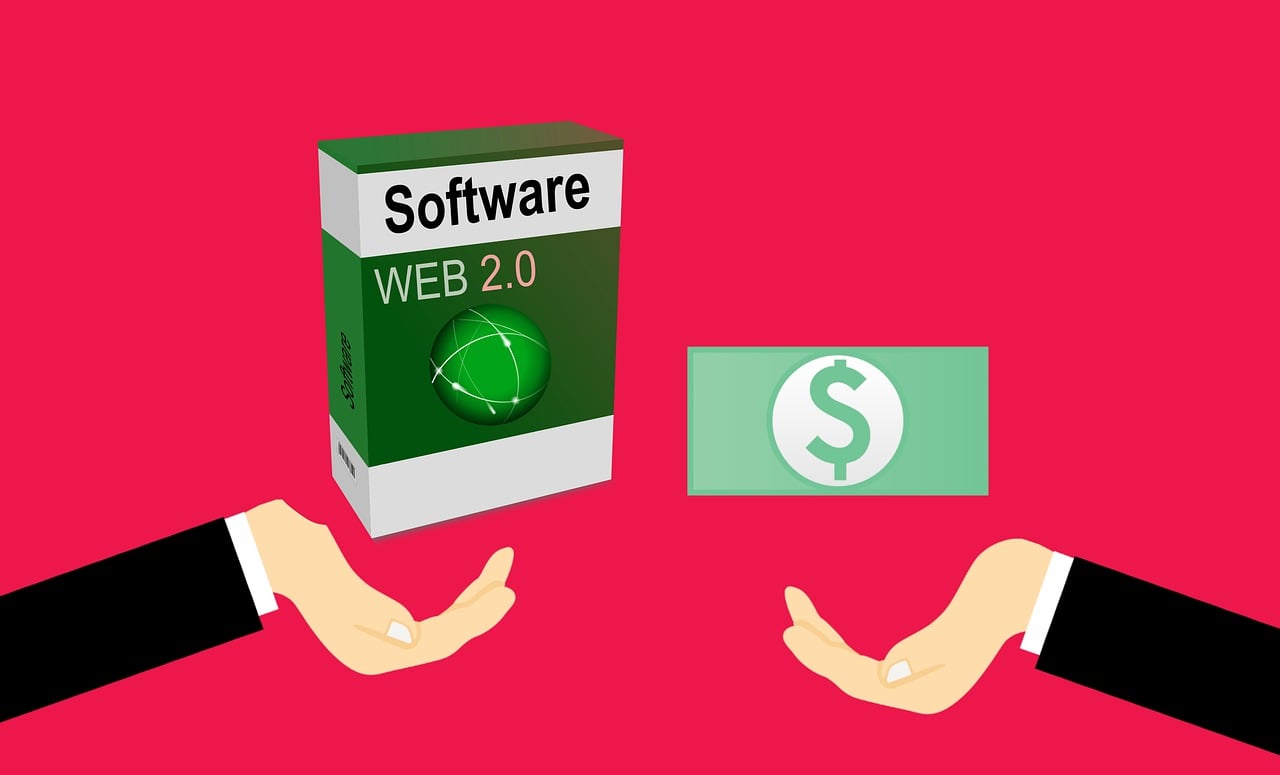
And to tie into the last point, personal events also present the opportunity for demos. Just imagine all those prospects you can convert by giving them firsthand experience with your product while offering them real-time assistance with any questions or problems they might have. Live demos are one of the best ways to show off what your software does best while forming a connection to a prospective client. Of course, you’re not only limited to demos, as you can also let customers experience your product with free trial/limited time offers and Freemium subscriptions. The latter allows prospects to enjoy some basic features of your software without the time pressure of the former. This way, they’re able to get a good feel for how they can benefit from your software and perhaps edge closer to a Premium subscription to unlock more features.
Copyright Mohamed_hassan (Pixabay)
These 5 steps should help get you out the door in creating a good marketing strategy for your software company. But as pointed out by feedough.com, once people start using your software, you need to keep them engaged so they renew their subscription and recommend it to others. Maintain the relationships you form with your customers by continually following these outlined steps, making reasonable adjustments every now and then as the market and trends shift.
Some further reading:
https://www.webfx.com/industries/tech/software/
https://www.linkedin.com/pulse/7-effective-marketing-strategies-software-companies-shahmeer-khan
https://teamdeck.io/toolbox/marketing-strategy-for-a-software-house-what-should-it-include/
https://www.feedough.com/software-marketing-strategy/
https://blog.tmetric.com/7-marketing-strategies-for-software-development-companies/






 info@cascadestrategies.com
 2032 Newport Way NW,
Issaquah, WA 98027 (425) 677-7430