


Feb
Can AI & Human Researchers Coexist In Market Research?
jerry9789 0 comments artificial intelligence, Brand Surveys and Testing, Burning Questions


AI In Market Research Today
With 90% of the world’s data created in just two years time between 2021 and 2023 and the global data volume standing at 149 zettabytes by 2024, it’s understandable why AI would be readily adopted by the market research industry. Traditional methods of data collection and analysis would hold a place in market research but they simply aren’t as powerful as AI when it comes to handling all that staggering volume of data. But is AI powerful enough to take the place of human researchers?
AI enables research teams to move, process and analyze massive datasets with speed and accuracy, efficiently handling all the repetition and scale involved in the research process. From drafting questionnaires to monitoring survey data quality, from analyzing open-ends to formulating dashboards and charts, AI fully automates the research process leading to faster and better decisions at a scale beyond the capabilities of human researchers.
But is AI the endgame for market research? Does it make human researchers obsolete?

Image: geralt
Cascade Strategies and AI
Cascade Strategies conducted a member perceptions study for a company looking to develop and implement a brand typology. The overall goal of the study was to help them better understand their different customer type’s overall motivations and aspirations for more effective engagement. As part of the study, we conducted an online survey with over 1,500 of their randomly selected members. We then utilized an AI-assisted Self-organizing Map (SOM) to run all the cases recursively, sometimes millions of times, until it optimizes the separations among the groups. The SOM produced a 6-group solution, with each group having a dominant passion that is served well or poorly by the company, ranging from proclivity for deals and new brands to yearning for customization and connection with other users.
The AI has done the heavy lifting of scanning all that dataset, surfacing themes, and summarizing the respondents. It has done enough to structure the story of each group but not enough tell or paint the whole picture.
This is where the human researchers at Cascade Strategies step in. We came up with names for each group that best described their dominant passion, names resonant enough that they not only convey an immediate idea of what they’re most passionate about but makes them fundamentally relatable even if one doesn’t necessarily share the same propensities: Shopper, Seeker, Learner, Sharer, Individualizer and Intellectual.
In isolation, each group achieves the study’s goal of guiding the company on the most effective way to engage with them. Their sum, however, grants the company an overview on how to improve and further develop its platform by considering and introducing new features that matter to one particular group, but would essentially benefit its membership base as a whole when implemented. For example, the Sharer would appreciate increased opportunities to connect and interact with other experts and enthusiasts of the same interests in the platform by making it easier to make reviews and share content.
AI surfaced all those patterns and signals from all that survey data, but it lacked the judgment and context to elevate it into a meaningful and coherent narrative. Human researchers, on the other hand, saw what story can be told from all those themes and by layering in human understanding, they’re able to tie them down to actionable business decisions.

Image: Christina Morillo
Leveraging AI In Market Research
So would AI replace human researchers? We’d like to frame our response to this question with the words of Joseph Weizenbaum, one of AI’s early researchers: “We can count, but we are rapidly forgetting how to say what is worth counting and why.”
Yes, AI is powerful enough to handle large amounts of data to identify patterns, cluster themes, and summarize respondents, but it generates outputs rather than insights. Outputs foster decisions rooted in logic and reasoning, but insights spring from judgment and context. Outputs can provide directions and surface themes from which stories can be framed, but insights take it one step further by asking what matters and why it matters, adding depth and resonance to the story.
In addition, Weizenbaum posits that computer programming can make decisions but it can’t ultimately choose. Just like insights, choosing requires judgment which takes in emotions, values and experience.
We at Cascade Strategies are among a growing number of proponents who believe that AI works best as a tool and extension of human intelligence and talents. AI strips the friction from manual, repetitive work without compromising methodological rigor and accuracy, but rather than adopting it for the sake of automation, we choose to see it as a freeing and empowering agent that enables researchers to focus more on interpreting data with the context of human understanding and values, translating insights into sensible and confident business decisions. Just as quantitative and qualitative research can coexist in the same study, we choose to live in a world where AI and human researchers work together towards the same goal of finding and crafting meaningful and relevant stories worth telling.

Image: Pavel Danilyuk
Featured Image: Ron Lach
Top Image: kc0uvb

Sep
What It Means to Choose or Decide In The Age of AI
jerry9789 0 comments artificial intelligence, Burning Questions

Longstanding Concerns Over AI
From an open letter endorsed by tech leaders like Elon Musk and Steve Wozniak which proposed a six-month pause on AI development to Henry Kissinger co-writing a book on the pitfalls of unchecked, self-learning machines, it may come as no surprise that AI’s mainstream rise comes with its own share of caution and warnings. But these worries didn’t pop up with the sudden popularity of AI apps like ChatGPT; rather, concerns over AI’s influence have existed decades long before, expressed even by one of its early researchers, Joseph Weizenbaum.
ELIZA
In his book Computer Power and Human Reason: From Judgment to Calculation (1976), Weizenbaum recounted how he gradually transitioned from exalting the advancement of computer technology to a cautionary, philosophical outlook on machines imitating human behavior. As encapsulated in a 1996 review of his book by Amy Stout, Weizenbaum created a natural-language processing system he called ELIZA which is capable of conversing in a human-like fashion. When ELIZA began to be considered by psychiatrists for human therapy and his own secretary interacted with it too personally for Weizenbaum’s comfort, it led him to start pondering philosophically on what would be lost when aspects of humanity are compromised for production and efficiency.

Copyright chenspec (Pixabay)
The Importance of Human Intelligence
Weizenbaum posits that human intelligence can’t be simply measured nor can it be restricted by rationality. Human intelligence isn’t just scientific as it is also artistic and creative. He remarked with the following on what a monopoly of scientific approach would stand for, “We can count, but we are rapidly forgetting how to say what is worth counting and why.”
Weizenbaum’s ambivalence towards computer technology is further supported by the distinction he made between deciding and choosing; a computer can make decisions based on its calculation and programming but it can not ultimately choose since that requires judgment which is capable of factoring in emotions, values, and experience. Choice fundamentally is a human quality. Thus, we shouldn’t leave the most important decisions to be made for us by machines but rather, resolve matters from a perspective of choice and human understanding.
AI and Human Intelligence in Market Research
In the field of market research, AI is being utilized to analyze a multitude of data to produce accurate and actionable results or insights. One such example is deep learning models which, as Health IT Analytics explains, filter data through a cascade of multiple layers. Each successive layer improves its result by using or “learning” from the output of the previous one. This means the more data deep learning models process, the more accurate the results they provide thanks to the continuing refinement of their ability to correlate and connect information.
While you can depend on the accuracy of AI-generated results, Cascade Strategies takes it one step further by applying a high level of human thinking. This allows Cascade Strategies to interpret and unravel insights a machine would’ve otherwise missed because it can only decide, not choose.
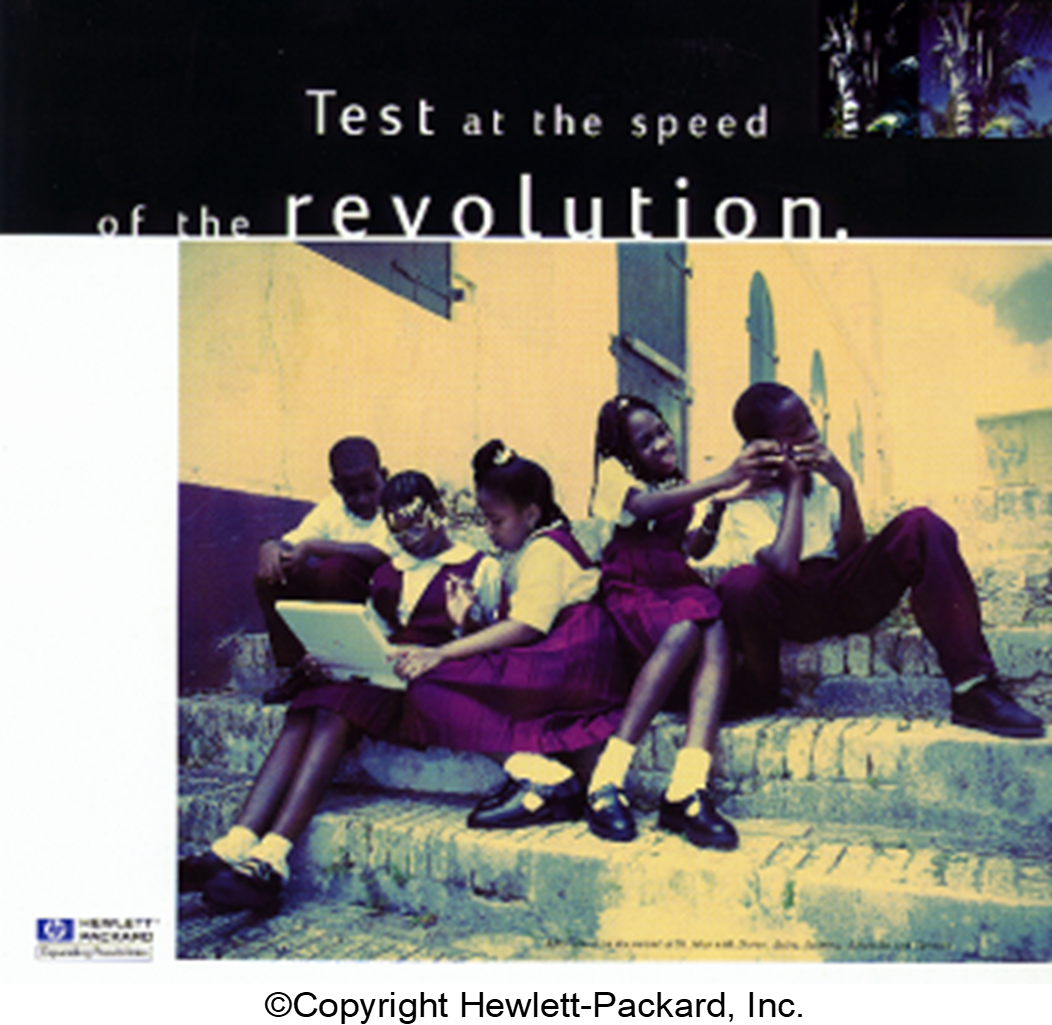
Take a look at the market research project we performed for HP to help create a new marketing campaign. As part of our efforts, we chose to employ very perceptive researchers to spend time with worldwide HP engineers as well as engineers from other companies.
This resulted in our researchers discovering that HP engineers showed greater qualities of “mentorship” than other engineers. Yes, conducting their own technical work was important but just as significant for them was the opportunity to impart to others, especially younger people, what they were doing and why what they were doing was important. This deeper level of understanding led the way for a different approach to expressing the meaning of the HP brand for people and ultimately resulted in the award-winning and profitable “Mentor” campaign.
If you’re tired of the hype about AI-generated market research results and would like more thoughtful and original solutions for your brand, choose the high level of intuitive, interpretive, and synthesis-building thinking Cascade Strategies brings to the table. Please visit https://cascadestrategies.com/ to learn more about Cascade Strategies and more examples of our better thinking for clients.






 info@cascadestrategies.com
 2032 Newport Way NW,
Issaquah, WA 98027 (425) 677-7430