


Feb
Can AI & Human Researchers Coexist In Market Research?
jerry9789 0 comments artificial intelligence, Brand Surveys and Testing, Burning Questions


AI In Market Research Today
With 90% of the world’s data created in just two years time between 2021 and 2023 and the global data volume standing at 149 zettabytes by 2024, it’s understandable why AI would be readily adopted by the market research industry. Traditional methods of data collection and analysis would hold a place in market research but they simply aren’t as powerful as AI when it comes to handling all that staggering volume of data. But is AI powerful enough to take the place of human researchers?
AI enables research teams to move, process and analyze massive datasets with speed and accuracy, efficiently handling all the repetition and scale involved in the research process. From drafting questionnaires to monitoring survey data quality, from analyzing open-ends to formulating dashboards and charts, AI fully automates the research process leading to faster and better decisions at a scale beyond the capabilities of human researchers.
But is AI the endgame for market research? Does it make human researchers obsolete?

Image: geralt
Cascade Strategies and AI
Cascade Strategies conducted a member perceptions study for a company looking to develop and implement a brand typology. The overall goal of the study was to help them better understand their different customer type’s overall motivations and aspirations for more effective engagement. As part of the study, we conducted an online survey with over 1,500 of their randomly selected members. We then utilized an AI-assisted Self-organizing Map (SOM) to run all the cases recursively, sometimes millions of times, until it optimizes the separations among the groups. The SOM produced a 6-group solution, with each group having a dominant passion that is served well or poorly by the company, ranging from proclivity for deals and new brands to yearning for customization and connection with other users.
The AI has done the heavy lifting of scanning all that dataset, surfacing themes, and summarizing the respondents. It has done enough to structure the story of each group but not enough tell or paint the whole picture.
This is where the human researchers at Cascade Strategies step in. We came up with names for each group that best described their dominant passion, names resonant enough that they not only convey an immediate idea of what they’re most passionate about but makes them fundamentally relatable even if one doesn’t necessarily share the same propensities: Shopper, Seeker, Learner, Sharer, Individualizer and Intellectual.
In isolation, each group achieves the study’s goal of guiding the company on the most effective way to engage with them. Their sum, however, grants the company an overview on how to improve and further develop its platform by considering and introducing new features that matter to one particular group, but would essentially benefit its membership base as a whole when implemented. For example, the Sharer would appreciate increased opportunities to connect and interact with other experts and enthusiasts of the same interests in the platform by making it easier to make reviews and share content.
AI surfaced all those patterns and signals from all that survey data, but it lacked the judgment and context to elevate it into a meaningful and coherent narrative. Human researchers, on the other hand, saw what story can be told from all those themes and by layering in human understanding, they’re able to tie them down to actionable business decisions.

Image: Christina Morillo
Leveraging AI In Market Research
So would AI replace human researchers? We’d like to frame our response to this question with the words of Joseph Weizenbaum, one of AI’s early researchers: “We can count, but we are rapidly forgetting how to say what is worth counting and why.”
Yes, AI is powerful enough to handle large amounts of data to identify patterns, cluster themes, and summarize respondents, but it generates outputs rather than insights. Outputs foster decisions rooted in logic and reasoning, but insights spring from judgment and context. Outputs can provide directions and surface themes from which stories can be framed, but insights take it one step further by asking what matters and why it matters, adding depth and resonance to the story.
In addition, Weizenbaum posits that computer programming can make decisions but it can’t ultimately choose. Just like insights, choosing requires judgment which takes in emotions, values and experience.
We at Cascade Strategies are among a growing number of proponents who believe that AI works best as a tool and extension of human intelligence and talents. AI strips the friction from manual, repetitive work without compromising methodological rigor and accuracy, but rather than adopting it for the sake of automation, we choose to see it as a freeing and empowering agent that enables researchers to focus more on interpreting data with the context of human understanding and values, translating insights into sensible and confident business decisions. Just as quantitative and qualitative research can coexist in the same study, we choose to live in a world where AI and human researchers work together towards the same goal of finding and crafting meaningful and relevant stories worth telling.

Image: Pavel Danilyuk
Featured Image: Ron Lach
Top Image: kc0uvb

Nov
Are We Seeing The Start Of The AI Pullback?
jerry9789 0 comments artificial intelligence, Burning Questions

What Is AI Pullback?
In these last few years, we’ve all heard nothing but the revolutionary and transformative influence of Artificial Intelligence not only in the mainstream consciousness but also in various industries. A mixture of excitement and anxiety, we’ve collectively marveled at what Generative AI could produce or emulate in little to no time at all while grasping at the notion of what all this automation means for the human workforce and talent. However, the tone appears to be shifting these past few months with data showing large companies’ adoption of AI on the decline.
As reported in Apollo, a biweekly US Census Bureau survey of 1.2 million firms revealed a downward trend in AI utilization for companies with more than 250 employees. Falling from about 13.5% in June to under 12% in August, it’s the largest decline for AI adoption since the survey started in November 2023. Mid-sized companies or firms with less than 250 employees but more than 19 workers showed decreasing or stagnating AI adoption. It’s only with small companies with less than four employees that demonstrated a slight increase in AI usage.
New reports might help shed light on the AI pullback, such as a recent one from MIT indicating that 95% of AI pilot programs failed to boost company revenues or productivity. MIT’s findings were based on reviews of over 300 public corporate AI usage, surveying 350 employees, and talking with 150 industry leaders.
A recent study by METR revealed that developers surprisingly took 19% longer to complete issues when using AI coding tools than without. Yet despite actually experiencing slowdown, the developers still believed AI sped them up by 20%. This gap between developers’ perception and reality is representative of these past few years with the hyped up implementation of AI into everything software-related and unrestrained confidence in the hot new tech in spite of the unfavorable results.
IT Consultancy Gartner also attempted to quantify how much work AI agents get wrong when it “hallucinates.” They found that generative AI performs office tasks wrong a staggering 70% of the time. With that much error, human oversight becomes a necessity and in some cases, objectives would’ve been served much better had the task been assigned to a person instead of a machine.

Image: Mathias Reding
Is AI Pullback A Sign Of AI Adoption Maturity?
On a different note, the MTLC wrote that the AI pullback might seem like a slowdown but it could actually be a correction or calibration, as is the natural progression with any emerging tech’s usage. They pointed out that the same MIT report accounted for over 90% of employees using AI tools, no matter the company stance with AI. That these workers would utilize AI just so they can perform their tasks more efficiently and faster. And that this is another way at looking at AI adoption- “bottom-up, not just top down.”
It’s not that AI isn’t viable, but rather “the projects weren’t scoped, aligned, or designed for outcomes.” 95% of AI projects fail not because of the technology but because of how companies approach AI adoption.
AI pullback is signaling the transition from overenthusiasm to realistic expectations, from experimentation to production. For enterprise businesses to succeed with AI, they would need to identify which models, tools and processes work, which projects to invest in, and where AI would deliver the most value.

Image: Andrea Piacquadio
Cascade Strategies’ Approach To AI
The promise of increased production and revenue had led to companies to replace or cease hiring human workers in favor of AI during the onset of its mainstream popularity. Now that AI pullback is happening, companies have begun hiring human workers again not only to oversee but fix or improve sloppy AI outputs.
Cascade Strategies has always approached AI not just merely as a tool but as an augmentation and extension of human intelligence and talent. Yes, AI is a very powerful and promising technology but we recognize early on that on its own, it is gravely limited to the datasets its fed and their quality, the eventual gaps providing the perfect breeding ground for “hallucinations,” each iteration degrading and becoming less of what was before. We’ve always seen human intervention and guidance as essential for AI to maximize its potential; with the AI pullback, more and more companies are on the brink of discovering this incredible synergy between human and artificial intelligence.
Powered by AI, research becomes scalable and cost-effective by being applicable in all facets of the business and not just flagship projects; human oversight amplifies all that productivity and efficiency by unlocking innovative, resonant and actionable insights.
If you would like to learn more about how our human-centered market research work can benefit you or your company, feel free to contact us here.

Image: cottonbro studio
Additional Reading:
AI Pullback Has Officially Started – Will Lockett, medium.com Oct. 22, 2025
Data Shows That AI Use Is Now Declining at Large Companies – Joe Wilkins, futurism.com Sep. 8, 2025
AI adoption slows among big firms, U.S. data shows – Jullianna Anne Briones, tech.co Sep. 18, 2025
US Census Bureau: AI Adoption Has Declined for Large Companies – Conor Cawley, Sep. 11, 2025
AI adoption rate is declining among large companies — US Census Bureau claims fewer businesses are using AI tools – Hassam Nasir, tomshardware.com Sep. 8, 2025
Featured Image: MrWashingt0n
Top Image: Thirdman

Oct
A Human Center Makes Market Research All The More Powerful
jerry9789 0 comments artificial intelligence, Brand Surveys and Testing, Brandview World

The Future Of Research Is Here
You’ve seen it and there’s no denying it. Industries have been reshaped by the increasing utilization of Artificial Intelligence just in the last few years alone. Promising and delivering speed and optimization at the fraction of the costs and resources, it’s powerful, revolutionary and exciting. And as with any emerging technology, it comes with its own set of anxieties.
In line with its growing popularity and adoption, people in different industries have been expressing nervousness over being replaced in their jobs by AI. Certain repetitive, data-driven tasks are at the greatest risk of being supplanted by AI. However, AI also opens up opportunities to shift focus and upskill the more complex and creativity-driven facets of work roles, creating new jobs or augmenting existing ones.
The research industry is just as impacted by AI’s progressive application. It’s naive to assume that researchers would be replaced wholesale by AI, but there’s more to delivering research results than just gathering and crunching data.

Image: Circe Deyer
Our take on the integration of AI into research
We’ve always maintained that AI is a good advisor, but it’s a poor decision-maker. We’d like to modify that by saying it’s an even worse storyteller, if at all.
Cascade Strategies has been in the market research industry for over three decades now, serving some of the biggest local and international companies. You can say we’ve seen it all in this industry, but we’re just as fascinated as everyone else by the mainstream popularity of AI in the past few years. We’ve applied it in our methodologies, been impressed by its operational benefits and how it changed industries, but in the end, we know truthfully that it is not the end-all, be-all for research work. We believe that AI would serve us better by being a powerful extension of human judgment, creativity, and insight.
AI can be fed large datasets to approximate human thinking, but we believe it can never replicate human perspicacity, the kind of intelligence honed and guided by human values and experience. Take a look at our Expedia Group Case Study where we’ve utilized AI to generate multiple revenue-granting scenarios, then tempered the decision-making process by applying high-level human thinking to craft messaging that resonates with the end-user.
AI-driven research can produce results based on what has come before, but it can never uncover the truly novel, meaningful and resonant insights high-level human thinking unlocks. These are the insights that empower big and sweeping decisions. Data-based results from AI would seem lifeless and unrelatable. But if they are imbued with human interpretation, that output elevates into a masterful narrative that sparks imagination, questions boundaries, and transforms perspectives.

Image: geralt
Featured Image: mohamed mahmoud hassan
Top Image: geralt
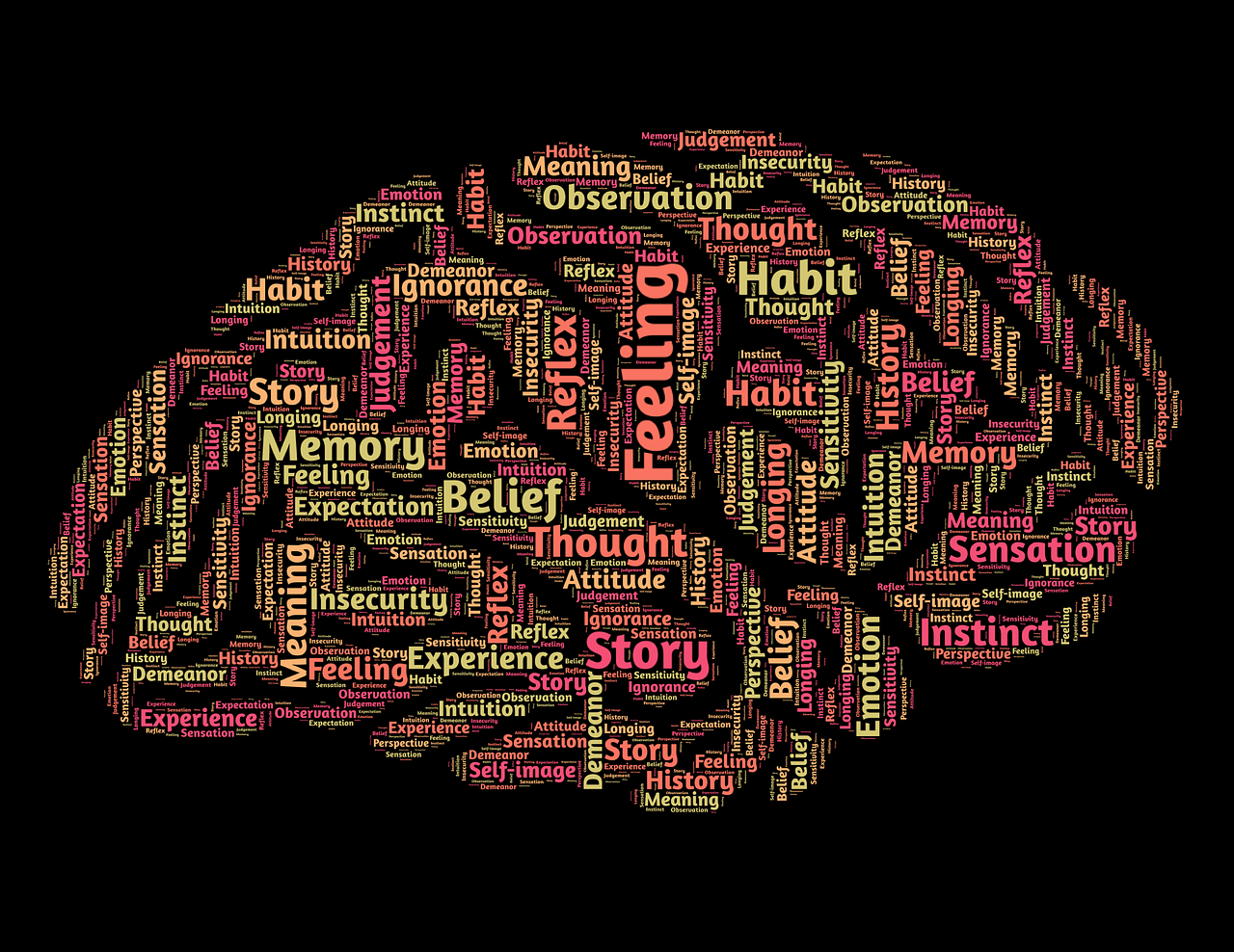
Sep
Achieve Breakthroughs By Tapping Into Your Primal Intelligence
jerry9789 0 comments artificial intelligence, Burning Questions

Is Artificial Intelligence going to be the be-all, end-all for decision-making, problem-solving and innovation? If AI is faster, more logical and more efficient than humans, why hasn’t it overtaken us already? Is there a way for human genius to gain the edge over AI?
Yes, AI has changed the way we’ve done things these last few years – optimizing and streamlining processes to improve efficiency and effectiveness while maximizing output and in some cases, reducing costs. AI thrives in a production environment with defined datasets, but take away all that reliable data and introduce new variables, and it crumbles.
AI can generate art and stories, but it does this based on the data it was fed and trained on. It’s truly incapable of producing anything genuinely novel from outside that frame. This means it has the potential to suffer in a self-loop of homogeneous and biased outputs over time, building towards incoherence.
In a world that is increasingly being taken over by AI processes and outputs, recognizing and understanding this limitation is going to help human intelligence find its place and continue to thrive and evolve. In fact, just as AI gained mainstream popularity these past few years, another type of human intelligence has captured the attention and imagination of researchers – and the U.S. Army at the same time.

Image: Lukas
What Is Primal Intelligence?
Ohio State University professor Angus Fletcher, along with other researchers at Ohio State’s Project Narrative, started to investigate in 2021 something called “primordial brainpower” that reportedly drives human intuition. Their research led them to something they call Primal Intelligence, a kind of “natural cleverness” by humans that can be strengthened through training, but which AI can’t replicate.
Professor Fletcher describes Primal Intelligence as part of our lost nature and a key to activating intuition, imagination, emotion, and common sense. The U.S. Army Special Operations then adopted primal training for its most classified units and according to Professor Fletcher, Special Operators saw the future faster, thought more quickly, acted more swiftly, and healed more rapidly from trauma. After the Army authorized trials on civilians such as entrepreneurs, doctors, engineers, managers, coaches, teachers, investors, and NFL players, they found their leadership and innovation significantly improved. These civilians coped better with change and uncertainty, and experienced less anger and anxiety. The Army subsequently provided primal training to college and K–12 classrooms with students as young as eight, and they reported substantial beneficial effects from the training. In 2023, the Army awarded Professor Fletcher the Commendation Medal for his research on retraining the human mind.
Professor Fletcher’s research has been endorsed by renowned psychologists, neuroscientists, and doctors. He has received support from major institutions such as the National Science Foundation. He also wrote the book Primal Intelligence: You Are Smarter Than You Know, from which the following five key insights for sharpening our primal intelligence are derived.

Image: Alana Jordan
1. Exceptional Information
Special Operators “see” or anticipate the future faster than other soldiers on the battlefield, thanks to their unusually high level of intuition. But how does one improve their intuition?
To begin with, you’ll need to dissociate intuition from the decades-old concept that intuition is just mere pattern matching. The aforementioned Operators have trained their brains to find what the Army has dubbed “exceptional information.” Succinctly put, exceptional information is an exception to a previously established rule; it’s the opposite of a pattern because it’s the breaking of a pattern.
Young children score high on intuition but lower at pattern matching because their brains are focused more on unusual details than on familiar patterns. Training your brain to spot exceptions rather than thinking in patterns can help improve your intuition.
Travel or go on trips to immerse your brain in places that break the pattern of your regular life. Reading the works of authors like Shakespeare can also help improve intuition because of characters who are exceptions to traditional narrative tropes, like Hamlet the deep-thinking action hero or the cold and scheming Cleopatra who possesses a loving heart. Known Shakespeare readers who were able to anticipate the future by spotting exceptions range from Nikola Tesla with his AC motor, Marie Curie with radioactivity, and even Vincent van Gogh and his use of aquamarine.

Image: Donald Tong
2. Rethinking Optimism
Optimism pushes us to take on chances which could lead to growth, but why do many people fall back into pessimism? Why do we need to remind ourselves that optimism works better than pessimism instead of instinctively switching to the former frame of mind whenever something new or unusual comes up? Why is optimism this fragile in our minds?
This has something to do with how we think of optimism. We’ve been taught that optimism is “this will succeed,” when “this can succeed” is much more powerful and stronger. Instead of convincing us that this will succeed, we remember that we can succeed.
Remembrance over visualization. Special Operators call this method antifragile because remembering that one time in the past when you’ve been successful is more resilient than magically thinking of achieving success. Building your optimism on the foundation of faith where you’ve succeeded one time no matter how many times you fail can be all you need to keep on going. This is an improvement over being buoyed by the hope that you can succeed, but having your confidence eroded when you don’t.

Image: Kaboompics.com
3. Thinking In Story
In new situations with little to no precedent values (where AI falls apart), how are Special Operators not only able to pull through but also excel?
We have to remind ourselves that the human brain features more than one type of intelligence. While it evolved over a million years with the capacity to think logically and process data from which computers were modeled, the human brain also developed narrative cognition or simply put, the ability to think in story.
Thinking in story means the brain sees the “movement” of story, from beginning to middle to end, with room for imagination to explore possibilities and wisdom to sensibly tie things together. AI has the ability to generate story plots and images from datasets, but it still doesn’t read the story. It’s still our human brains that instill story and meaning to these generated plots and images.
High-data environment and conditions might not be conducive for thinking in story, but it finds its place in volatile and uncertain situations. Special Operators who performed well in volatility were found to have brains proficient at thinking in story.

Image: cottonbro studio
4. Empowerment Through Role-playing
Anger and anxiety are physiological indicators of a threat response. So what’s the best way to mitigate the brain’s threat response? Removing the threat, usually with outside force, might spring to mind but what if we tell you that conjuring a gameplan with your brain to deal with the threat is more effective?
That’s exactly how Special Operators function. Instead of avoiding threats, they advanced toward the threats and they do this without feeling anxious or angry. That’s because these Operators have trained their brains to imagine plans for dealing with threats. And they train their imagination by engaging in role-playing exercises.
Outside of Special Operations, role-playing can be taught to regular people or students by taking part in arts and humanities activities such as theater, literature, and history. The key is to be able to imagine oneself as somebody else in another place or situation, engaging the brain’s ability to imagine plans for handling threats.

Image: geralt
5. Possibility Over Probability
How do you train people so that you produce leaders and not just managers? Focus your training on expanding their ability to think not in probability but in possibility.
What’s the difference? Probability is calculated or based from past events while possibility assumes an event that hasn’t happened could happen. Probability is employed by statistics and computer AI while possibility empowers story and imagination. With a fundamentally different mental process involved, possibility engages original thinking, enterprise, and initiative: key mental qualities of entrepreneurs and leaders in general.
You can expand your sense of possibility by stimulating your brain’s premotor cortex and boosting your practical imagination with realistic tales of make-believe. The Wright brothers read the creative works of Charles Dickens and Mark Twain, while Special Operators prefer novels set in the near future or in a different culture.

Image: Katrin Bolovtsova
Cascade Strategies and Primal Intelligence
Cascade Strategies has not only been advocating for the “appropriate use of AI” but has also been consistently pushing for the appreciation of high-level human thinking, especially when it comes to market research. This research on primal intelligence underscores our stance on the irreplicable and inimitable merits of human intelligence. We believe there are values and experiences humans bring to the table that AI simply cannot match. We’ve always believed that breakthroughs in market research can only be unlocked only with the proper application of human intelligence. To learn more about how our thinking can help you with your brand development and market research needs, please contact us here.
Additional Reading:
Why AI Will Never Defeat Primal Intelligence
‘Primal Intelligence’ Review: Why Brains Are Better
Featured Image: johnhain
Top Image: geralt
Sep
What It Means to Choose or Decide In The Age of AI
jerry9789 0 comments artificial intelligence, Burning Questions
Longstanding Concerns Over AI
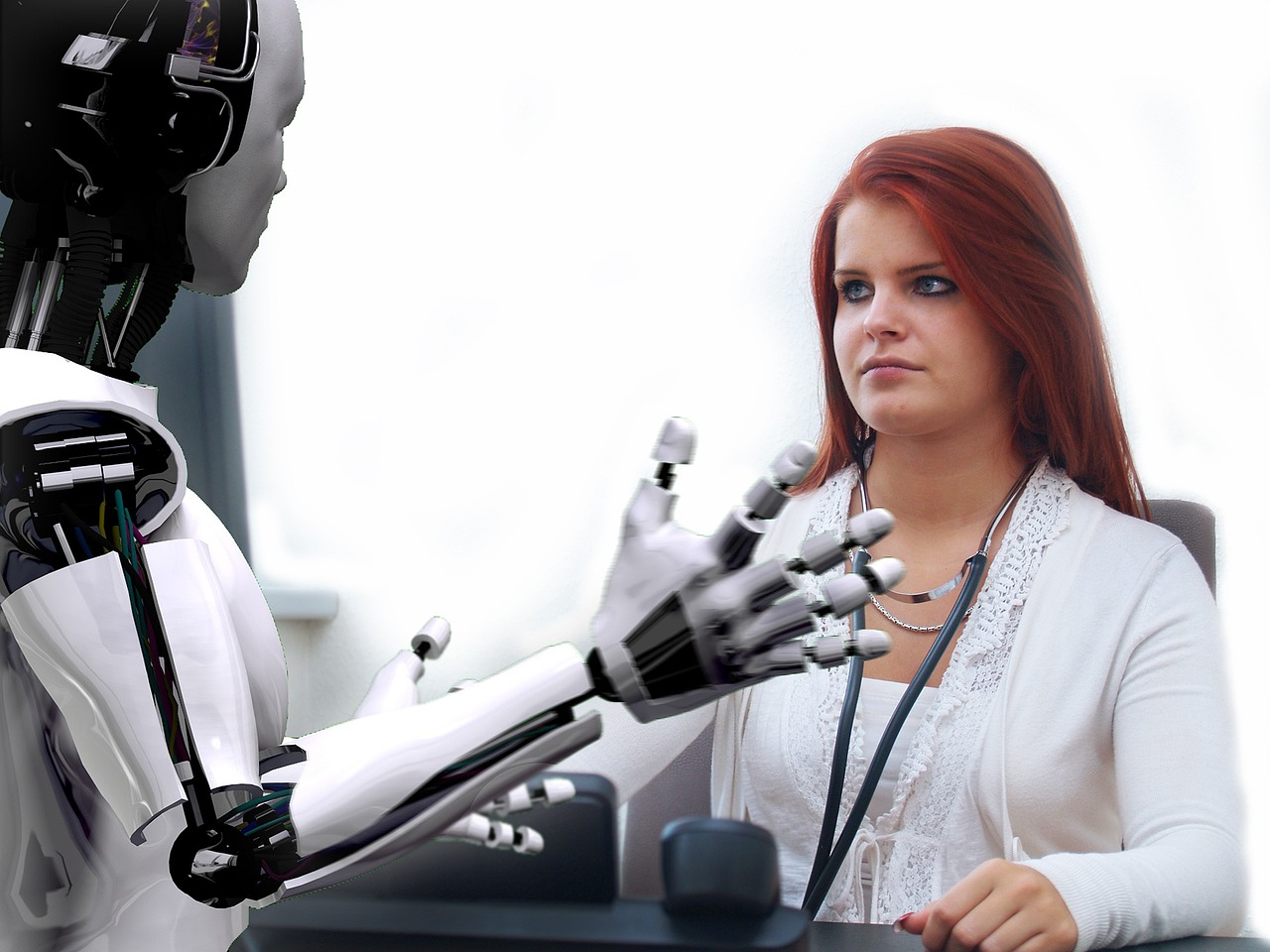
From an open letter endorsed by tech leaders like Elon Musk and Steve Wozniak which proposed a six-month pause on AI development to Henry Kissinger co-writing a book on the pitfalls of unchecked, self-learning machines, it may come as no surprise that AI’s mainstream rise comes with its own share of caution and warnings. But these worries didn’t pop up with the sudden popularity of AI apps like ChatGPT; rather, concerns over AI’s influence have existed decades long before, expressed even by one of its early researchers, Joseph Weizenbaum.
ELIZA
In his book Computer Power and Human Reason: From Judgment to Calculation (1976), Weizenbaum recounted how he gradually transitioned from exalting the advancement of computer technology to a cautionary, philosophical outlook on machines imitating human behavior. As encapsulated in a 1996 review of his book by Amy Stout, Weizenbaum created a natural-language processing system he called ELIZA which is capable of conversing in a human-like fashion. When ELIZA began to be considered by psychiatrists for human therapy and his own secretary interacted with it too personally for Weizenbaum’s comfort, it led him to start pondering philosophically on what would be lost when aspects of humanity are compromised for production and efficiency.

Copyright chenspec (Pixabay)
The Importance of Human Intelligence
Weizenbaum posits that human intelligence can’t be simply measured nor can it be restricted by rationality. Human intelligence isn’t just scientific as it is also artistic and creative. He remarked with the following on what a monopoly of scientific approach would stand for, “We can count, but we are rapidly forgetting how to say what is worth counting and why.”
Weizenbaum’s ambivalence towards computer technology is further supported by the distinction he made between deciding and choosing; a computer can make decisions based on its calculation and programming but it can not ultimately choose since that requires judgment which is capable of factoring in emotions, values, and experience. Choice fundamentally is a human quality. Thus, we shouldn’t leave the most important decisions to be made for us by machines but rather, resolve matters from a perspective of choice and human understanding.
AI and Human Intelligence in Market Research
In the field of market research, AI is being utilized to analyze a multitude of data to produce accurate and actionable results or insights. One such example is deep learning models which, as Health IT Analytics explains, filter data through a cascade of multiple layers. Each successive layer improves its result by using or “learning” from the output of the previous one. This means the more data deep learning models process, the more accurate the results they provide thanks to the continuing refinement of their ability to correlate and connect information.
While you can depend on the accuracy of AI-generated results, Cascade Strategies takes it one step further by applying a high level of human thinking. This allows Cascade Strategies to interpret and unravel insights a machine would’ve otherwise missed because it can only decide, not choose.
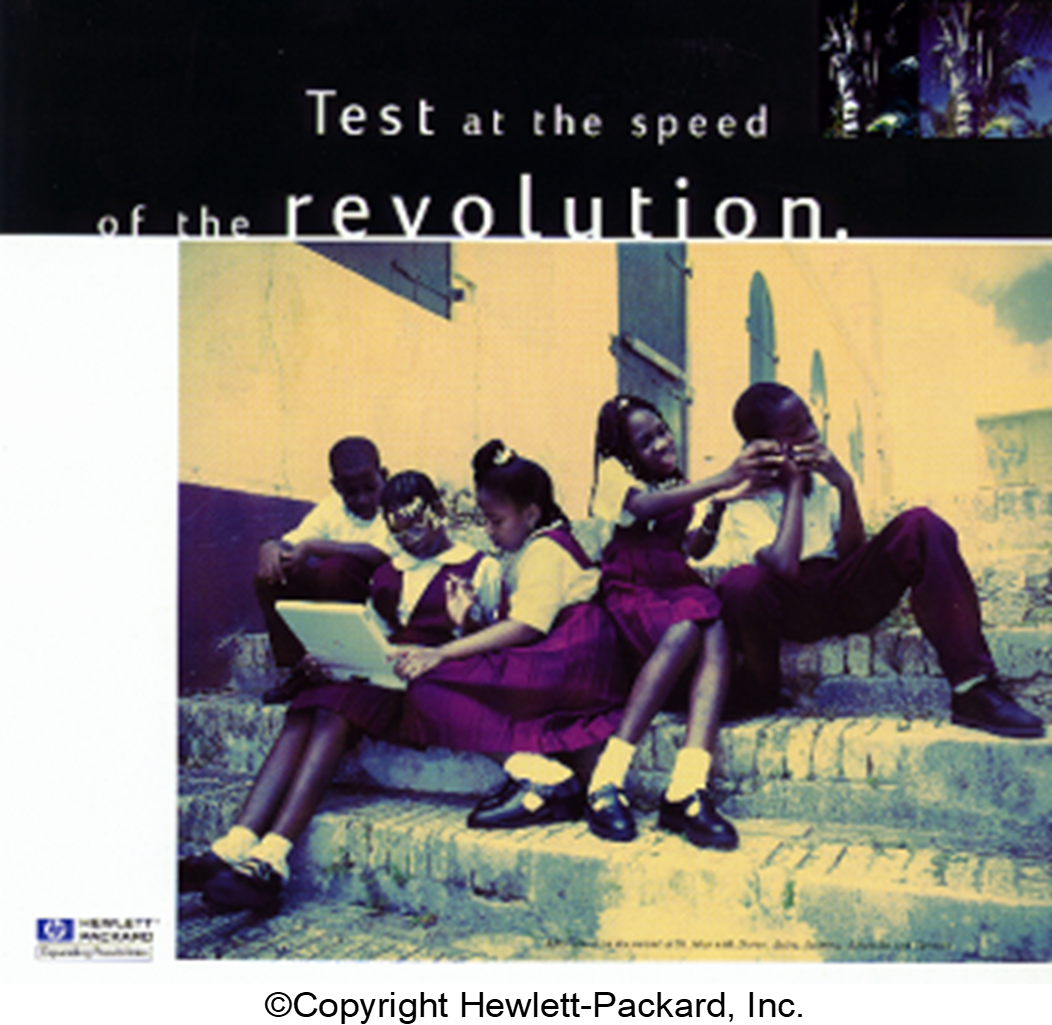
Take a look at the market research project we performed for HP to help create a new marketing campaign. As part of our efforts, we chose to employ very perceptive researchers to spend time with worldwide HP engineers as well as engineers from other companies.
This resulted in our researchers discovering that HP engineers showed greater qualities of “mentorship” than other engineers. Yes, conducting their own technical work was important but just as significant for them was the opportunity to impart to others, especially younger people, what they were doing and why what they were doing was important. This deeper level of understanding led the way for a different approach to expressing the meaning of the HP brand for people and ultimately resulted in the award-winning and profitable “Mentor” campaign.
If you’re tired of the hype about AI-generated market research results and would like more thoughtful and original solutions for your brand, choose the high level of intuitive, interpretive, and synthesis-building thinking Cascade Strategies brings to the table. Please visit https://cascadestrategies.com/ to learn more about Cascade Strategies and more examples of our better thinking for clients.







 info@cascadestrategies.com
 2032 Newport Way NW,
Issaquah, WA 98027 (425) 677-7430