


Aug
Do You Know How Many HHCAHPS Stars You Have?
jerry9789 0 comments Brand Surveys and Testing, Brandview World, Burning Questions


What Is The HHCAHPS Stars Ratings?
Is your home health agency delivering not just acceptable but high-quality care according to your patients? Are your staff effectively communicating and connecting with your clients? How do you compare to other home health agencies in your area? But more importantly, do you know how many HHCAHPS Stars you have?
In line with the Affordable Care Act’s goal for transparent and easily understandable public reporting of quality of care information, the Centers for Medicare and Medicaid Services (CMS) uses a 5-star scale rating with the Home Health Care Consumer Assessment of Healthcare Providers and Systems (HHCAHPS) survey. The first national, standardized, and publicly reported home health care patient survey, the 34-item HHCAHPS survey was specifically designed to measure the experiences of people getting home health care from Medicare and Medicaid-certified HHAs. It gathers feedback from current or recently discharged patients as well as their family or friends about their experience with an HHA. The HHCAHPS survey is conducted by approved survey vendors either by mail only, telephone only, or a mix of mail survey with a telephone follow-up for non-respondents. And to support internal customer service and quality-related efforts, the survey also allows HHAs to add their own customized questions after the core questions.
HHAs with at least 40 completed HHCAHPS surveys over the publicly reported four-quarter period are qualified to receive HHCAHPS Star Ratings. Those with fewer than 40 completed HHCAHPS surveys will not receive Star Ratings as they may not have sufficient statistical reliability to ensure true performance is measured; however, if they’re eligible to be reported during that time period, their individual HHCAHPS measure scores will still be publicly reported.
The HHCAHPS Star Ratings at the Home Health Compare make it easier for consumers to compare home health agencies (HHA) and make informed decisions when choosing their home health care provider. While the HHCAHPS Star Ratings do not impact an HHA’s Annual Payment Update (APU), the CMS believes that the HHCAHPS Star Ratings “will stimulate improvements in the quality of care delivered and provide incentives for HHAs to maintain or improve their own quality.”
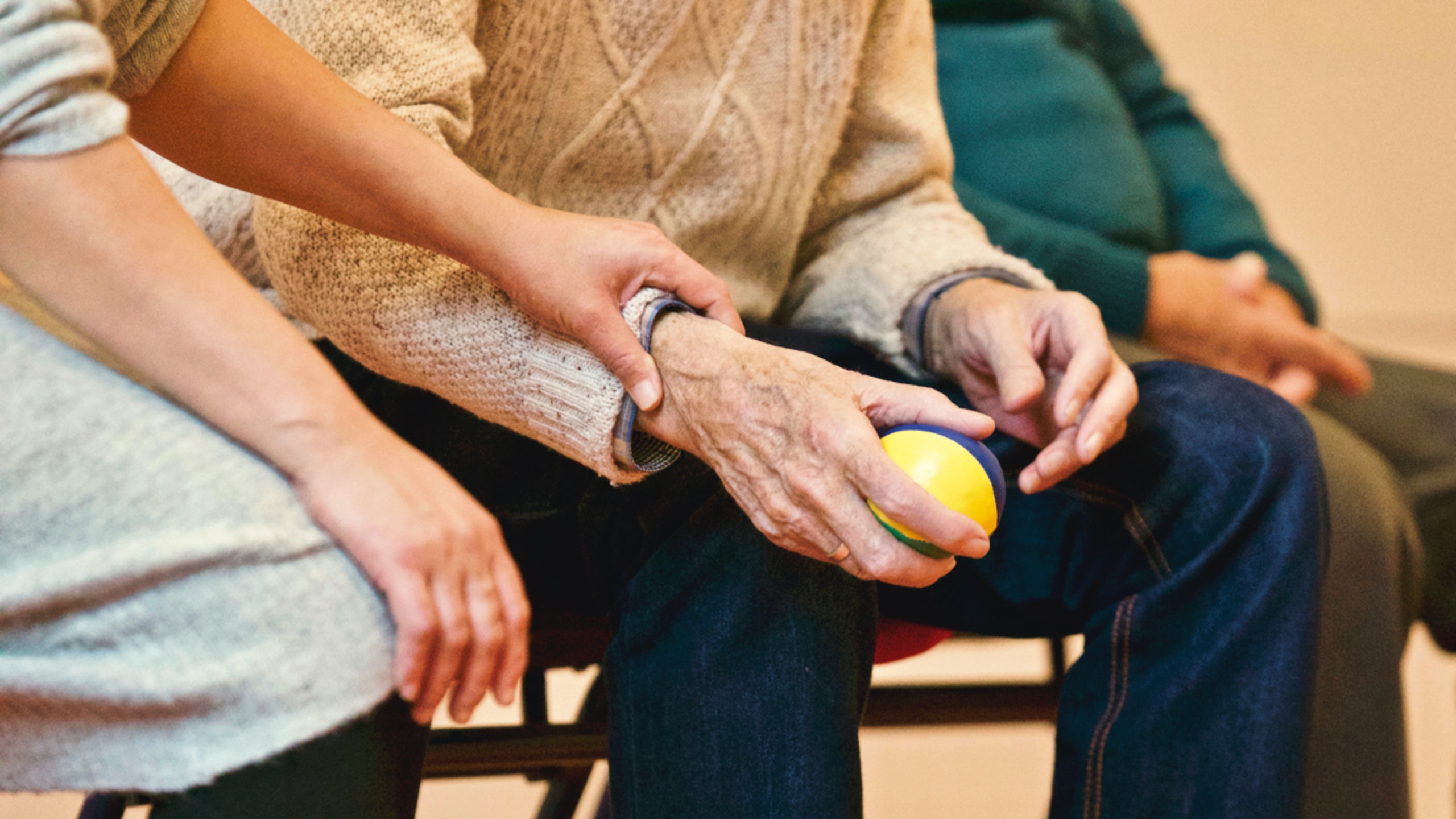
Image: Kampus Production
What Do The HHCAHPS Stars Ratings Measure?
The HHCAHPS Star Ratings are applied to each of the three publicly reported composite measures, from which specific questions from the survey are based, namely Care of Patients, Communication Between Providers and Patients, and Specific Care Issues. A Star Rating is also applied to the HHCAHPS global item, Overall Rating of Care.
On the other hand, an HHCAHPS Star Rating is not applied to the publicly reported Willingness to Recommend measure, as it mirrors the data in the Overall Rating of Care. CMS has found the Overall Rating of Care measure to be more stable.
To calculate the HHCAHPS Star Ratings, the responses to the survey items are first combined and converted to a 0-100 linear score and then adjusted for the effects of patient mix. To generate this adjustment, the CMS applies the patient-mix adjustment to quarterly HHCAHPS scores to account for certain patient subgroups that tend to respond more positively or negatively to the survey. The four-quarter averages of HHCAHPS linear scores are then rounded to whole integers using standard rounding rules.
Once the scores are linearized, adjusted and rounded, CMS assigns 1 to 5 stars for each HHCAHPS measure by applying statistical methods that analyze the relative distribution. The Star Rating for each of the four measures is then determined by the application of a clustering algorithm to the individual measure scores across HHAs.
The four HHCAHPS Star Ratings are then combined as a simple average to form the HHCAHPS Survey Summary Star Rating.
While more stars would mean a better home health care experience, a 1-star rating doesn’t necessarily translate to receiving poor home care from an HHA. This may mean that HHAs that received 2 or more stars delivered a better home health care experience on this particular measure.
An HHA that doesn’t have an HHCAHPS Survey Summary Star Rating means that they didn’t have enough surveys to allow star ratings to be meaningfully calculated, not that there is something wrong with the agency.

Image: Antoni Shkraba Studio
How Cascade Strategies Can Help Your HHA With Your HHCAHPS Star Ratings
As we’ve touched on earlier, you can find your HHCAHPS Star Ratings at the Home Health Compare. This user-friendly web tool allows one to select multiple HHAs at a time to compare the clinical quality of care provided and patient experiences at these agencies.
Are you happy with your HHA’s HHCAHPS Star Ratings? If you think your HHA can do a better job in getting more stars but need help formulating a gameplan, consider partnering with Cascade Strategies. In addition to being an approved HHCAHPS survey vendor, Cascade Strategies brings over thirty years of high quality market research experience to the table. For starters, we can help your HHA come up with the customized questions you can add after the core questions in your HHCAHPS survey. Using the insights we can derive from the responses to these customized questions, we can help your HHA identify areas of improvement and figure out what steps you can take to achieve your goals. To learn more about how we can help your HHA and your HHCAHPS Star Ratings, please contact us here.
Additional Reading:
How Researchers Are Helping Home Health Agencies with HHCAHPS Surveys
Featured Image: Tima Miroshnichenko
Top Image: Antoni Shkraba Studio
Aug
Nursing Homes Close as Need for Care Grows
jerry9789 0 comments Brand Surveys and Testing, Brandview World

Nursing Home Challenges
According to a report by the American Health Care Association and National Center for Assisted Living (AHCA/NCAL) in April 2022, more than 1,000 nursing homes have closed since 2015. This breaks down to 776 closures before the COVID-19 pandemic and 327 closures during the pandemic.
The same report also projected 400 nursing homes to close in 2022 based on financials at the time. While the Centers for Medicare & Medicaid Services reported 135 nursing homes closing in 2022, it is believed the number could be higher. This is due to possible discrepancies between the time a closure plan is submitted by a facility and its full execution to be listed in the federal database.
Staffing shortages and low reimbursement have long been recognized as factors for nursing home closures even before the pandemic. Rising wages and increased operation and maintenance costs in recent years exacerbated the situation, especially in rural areas.
The Impact of Nursing Home Closings
These closures resulted in former residents transferring to another facility, which in most cases, was farther from home. Some even must move twice after the first nursing home they transferred to subsequently closed. The process could also take weeks as social workers look for placements so a patient might find themself staying in a hospital in the meantime. Conversely, some nursing care facilities are keeping beds vacant because they don’t have enough workers.
Amidst these challenges, the need for long-term care grows with baby boomers joining this group.

Copyright Kampus Production
Nursing Home Alternatives
While the pandemic put a spotlight on the difficulties faced by the nursing care industry, it also opens opportunities for reforming and improving nursing homes. It also paves the way for exploring nursing home alternatives, such as in-home care for seniors. However, home care may prove to be the more expensive option and while it offers more personal and tailored assistance, you might have a senior who prefers or thrives more in a group setting like the one offered by assisted living communities.
Then there are group homes and family-style nursing homes, which are both small-scale options for assisted living. While a typical nursing home holds over 100 resident beds on average, a group home can house between five to 10 people (or 20, depending on the state) while family-style homes host 10 to 20 beds. These setups allow for more personalized care and a higher staff-to-client ratio in a sociable, homelike setting with home-cooked meals.
Due to being smaller in scale and not as advertised as regular nursing facilities, most group homes might slip past the radar of older adults or their loved ones seeking assisted living. With well-developed branding, however, smaller-scale assisted living communities can stand out even from the shadows of larger facilities and get their message across better to the seniors most suited for the living arrangements they offer.
Cascade Strategies can help you develop your branding, thanks to an array of services such as Brand Development Research and Segmentation Studies backed by over three decades of experience. Whether you are a smaller residential care home trying to get the word out or a larger assisted living community looking to reach the ideal senior or even the skilled nurses you need, we can help you find the right market research solution for your branding needs.






 info@cascadestrategies.com
 2032 Newport Way NW,
Issaquah, WA 98027 (425) 677-7430