


May
Will Synthetic Data Take Over Market Research?
jerry9789 0 comments artificial intelligence, Burning Questions


Is Synthetic Data Replacing Consumer Research?
Lately interest in synthetic data has been gaining steam, judging from the conversations, posts and discussions around it. Easier access to advanced modeling tools, improved efficiency and effectiveness, as well as the opportunity for better privacy governance are seen as the driving forces for the surge in its popularity. Some are even marketing synthetic research not just as a solution but as a replacement for traditional, slower and often expensive research methodologies, presenting it as the faster, cost-effective and modern approach to consumer research. But is synthetic data indeed the future of market research?

Image: Darlene Alderson
What Is Synthetic Data?
Put simply, synthetic data is information that wasn’t directly collected from real world consumers or respondents. Instead, it’s artificially generated data produced by mathematical models or algorithms designed to mimic natural or real-world data.
It can be “fully synthetic,” meaning it was primarily created by algorithms with little direct connection to real respondents, or “partially synthetic,” where gaps in real data are filled in by AI. “Augmented” data, perhaps the more popular form of synthetic data, is simulated information built or extrapolated from a foundation of real-world information.
Aside from the benefits of speed, efficiency, and cost-effectiveness, synthetic data is helpful with various aspects of experimentation, such as preliminary testing, checking hypotheses, stress testing, iteration, and data fusion, even before any data is collected. It could help improve cases where sample data is small or limited because of difficulties acquiring real data or niche populations. And with rising expectations when it comes to governing privacy, synthetic data is being perceived as a solution to easily share and analyze sensitive information with lesser risks of identifying respondents.

Image: Sherin Sam
What’s Keeping Researchers From Embracing Synthetic Data?
While researchers acknowledge the benefits offered by synthetic data and are interested enough to explore the new realms it unlocks, there’s no general feeling of rushing to embrace the new hot tech. Rather, the push for adopting synthetic data seems to come more from research agencies and their marketing arms, rather than the researchers themselves or even their corporate clients.
So why aren’t more and more researchers jumping on the prospect of using synthetic data for their studies? Proponents of synthetic data extol its 80% match rate with real data; however, researchers recognize that that 20% divergence might make or break the research, as it could be where you’ll find the more nuanced opinions, emotion-driven responses, and meaningful differences.
There’s also the stigma associating the term “synthetic” with “fake.” There is distinction, however, between synthetic data and fake data, as the former is generated rather than invented like the latter. Synthetic data draws from real data so it reflects outputs that can be validated, tested, and compared; fake data isn’t afforded the same respect and measure of accountability.
Understandably, there are concerns about the quality of the data the AI models are fed on. Poor quality data can lead to oversimplification, overexaggeration, and bias reinforcement. Perhaps most importantly, researchers are concerned with losing the human element in synthetic data, that disconnect from genuine behavior which is revealed when observing how people naturally- and often spontaneously- express themselves. Human truths that are deeply tied to cultural, economic, and psychological factors, grounding insights in real-world behavior while elevating them from mere statistical guesswork.
In addition to AI hallucinations, synthetic data left to iterate by itself eventually produces nonsensical results. AI models have also been observed to be too eager to please, potentially discounting the opportunity for contrarian responses, unexpected perspectives and uncovering pain points which real participants often provide, potentially leading to groundbreaking insights and discoveries.

Image: Michelangelo Buonarroti
The Future Of Market Research with Synthetic Data
Synthetic data might be far from the game-changer vendors are hyping it up to be but researchers appreciate having it as another tool at their disposal. Synthetic research could work if you need to confirm or validate ideas quickly and while working on a budget, but it shouldn’t be expected to produce breakthroughs or unravel deeper levels of understanding the same way natural data does. It can help improve studies by filling in gaps but these would require validation as well as being transparent to stakeholders regarding the nature of the data behind the results.
Rather than being a direct replacement, synthetic research could serve study objectives and goals better by complementing, supporting and/or augmenting consumer research. Synthetic data alone would give everybody the same information, but adding human input and oversight could mean the difference in uncovering resonant insights with a level of confidence that truly drives or influences decisions and actions.
Additionally, synthetic data is also not a one-and-done solution. Human behavior and attitudes aren’t fixed and they change over time, so why should synthetic data remain the same and stagnate? To foster credibility and uphold confidence, synthetic data would require consistent updating and stringent control, as well as be verifiable and reflective of the real world.
Yes, synthetic data can be powerful, but by itself would falter without that all-important additional layer of humanity. Market research was, after all, founded on listening to real people, so synthetic data must be anchored in human truths to produce meaningful and relevant insights. AI-driven market research might be lauded by some as the way of the future, but it won’t spark anywhere near the same level of confidence that synthetic data empowered by human truth inspires.
Additional Reading:
Can Synthetic Respondents Take Over Surveys?
Trade Talk: Synthetic data: Intriguing, but is anyone actually sold?
Why We Don’t Talk About ‘Synthetic Data’—And Why You Shouldn’t Either
Synthetic data can benefit medical research — but risks must be recognized
Synthetic Data in Market Research: An Expert View on Why Natural Data First Still Wins
Featured and Top Images: cottonbro studio

Feb
The Travel and Tourism Industry Takes Flight in 2026
jerry9789 0 comments Brand Surveys and Testing, Brandview World

Global tourism is recovering, according to SIS International, reaching $11.7 trillion in 2025 and projected to climb 3.55% to $16.5 trillion by 2035. International visitor spending surpassed pre-pandemic levels by hitting an unprecedented $2.1 trillion globally while cultural tourism is predicted to grow from $1.2 trillion this year to $2.6 trillion by 2035. The sector makes up 10.3% of the global GDP in 2025 and provides 371 million jobs worldwide- a 14M increase from 2024.
However, the US market is behind pre-pandemic records for international arrivals. For travel and tourism companies looking to thrive and take advantage of all that projected growth, SIS lists five critical insights to consider in their strategies:
- Consumers Pay Premium for Personalization – 61% of consumers are willing to spend more with companies offering options to customize and enhance their travel experiences, with top choices like breakfast, room size, and views.
- Consumers are Seeking Wellness Tourism – 44% of high-income travelers helped drive the global growth of wellness tourism to $1 trillion in 2025 while younger customers are quickly adopting wellness trips.
- Meeting Sustainability Expectations – Travelers are now skipping properties that don’t reflect adherence to sustainability standards.
- Managing AI Implementation – From hyper-personalized itineraries to predictive pricing, AI in tourism is booming with 28.7% annual growth projected to be over $5 billion by 2034.
- Addressing Overtourism Anxiety – High tourist volumes at 14 points year-over-year and worries over insufficient amenities rising by 12 points represent growing concerns with overtourism. Formulating dynamic pricing programs, learning about traveler tolerance levels towards crowding, and identifying potential or alternative destination choices to help manage demand are just some of the approaches companies can take to potentially reduce these anxieties.
The next ten years is an exciting time of growth and innovation for the travel and tourism industry. While all that growth is not without its challenges, reaching success is best navigated not by intuition but by a roadmap drawn by actionable and data-backed insights gained from high level market research.
Recognizing psychographics and behavioral patterns to predict booking behavior, mapping and understanding the entire customer journey, creating clear and measurable connections between program initiatives and revenue outcomes: these are just some of the things forward-looking companies can do to prosper In the travel and tourism industry in 2026.

Image: Valentin Ivantsov
Featured Image: JoshuaWoroniecki
Top Image: JESHOOTS-com

Jan
Food and Beverage Sector Expects Steady Growth (But It’s Not What You Think It Is)
jerry9789 0 comments artificial intelligence, Brand Surveys and Testing, Brandview World

According to SIS International, steady consumer demand would buoy the global food and beverage market growth to $11.4 trillion by 2030, with analysts predicting the US market specifically enjoying between 2% and 4% dollar sales increase in 2026. There is a caveat to this, however; this market growth would be reflected in dollars but not in units sold. Volume growth is projected to be flat to slightly negative as consumers continue to develop selective spending and eating habits, with the market’s revenue generated mostly by price increases between 2% and 4%.
SIS further enumerates five critical trends that could form the backbone of food and beverage brand strategies for the coming years:
- What Value Means For Different Consumers – Value isn’t limited to low price anymore and effective research would help identify which product attributes customers are willing to pay a premium or look elsewhere cheaper.
- Private Label Outpacing National Brands – Understanding where brand loyalty ends and products are viewed as commodities could help national brands compete with growing private labels.
- Consumers Favoring Protein and Gut-Friendly Products – Being a health product won’t sell it alone in an era of increasingly health-conscious shoppers; you’ll also need to recognize which health benefits appeal the most to target consumers and credibly communicate these attributes.
- Food and Beverage Experiences Are Evolving Beyond Flavor – Consumer preferences are growing more meticulous and sophisticated nowadays with texture, aroma, visual appeal, and mouthfeel contributing to the lasting impressions a food and beverage product can create.
- Non-alcoholic Beverages Stirring Up Innovation – Understanding the sober shift with the right set of questions opens up opportunities to design and introduce new beverage offerings without struggling much to find its ideal consumer base.
With effective and high quality market research, food and beverage brands can thrive instead of merely getting by during this projected period of steady industry growth. High level market research would confidently inform and shape business decisions with timely and deep insights on today’s food and beverage consumers, borne out of relevant and flexible research methodologies and backed by real-world validation.
In this period of steady customer demand, exploring beyond these five trends and delving deeper into understanding the driving forces of consumer behavior, attitudes and values through excellent market research could mean revenue gains for food and beverage brands, not in dollar growth through price increases but actual, bonafide volume sales.

All Image Credits: Magda Ehlers

Oct
Pendleton Woolen Mills – A Retail Story
jerry9789 0 comments artificial intelligence, Brand Surveys and Testing, Brandview World

Pendleton Woolen Mills allowed us to conduct qualitative and quantitative research for them. The result was a key brand insight about a kind of consumer called the Purist, who preferred the Pendleton shopping experience over the experiences offered by key competitors, and whose loyalty to Pendleton could be counted on. The campaigns built around the Purist helped Pendleton weather the storm of competition from competitors like Filson, Carhartt, and Orvis.
It’s doubtful that submitting the same data to AI would produce a finding as incisive as the Purist. This is something to bear in mind if you’re a retail brand seeking to thrive: human perspicacity counts.
There’s a kind of intelligence AI can’t reach. It has dimension, soul, and human inspiration. We’d do well to remember this as we pour more datasets into the maw of AI. If you’re a retailer and need perspicacity, you might call Cascade Strategies. We can help you see things AI can’t see.
Image: Eric Schucht

Oct

Blue Cross Blue Shield allowed us to conduct qualitative and quantitative research for them. The result was a key brand insight about the Sustainer, a kind of healthcare consumer who preferred to obtain coverage from Blue Cross Blue Shield rather than rivals United and Kaiser Permanente for a variety of reasons and tended to stick with Blue Cross Blue Shield for the long haul. The campaigns built around the Sustainer allowed Blue Cross Blue Shield to increase subscriptions and reduce churn.
It’s doubtful that submitting the same data to AI would produce a finding as incisive as the Sustainer. This is something to bear in mind if you’re a healthcare brand seeking to thrive: human perspicacity counts.
There’s a kind of intelligence AI can’t reach. It has dimension, soul, and human inspiration. In the healthcare business, we’d do well to remember this as we pour more datasets into the maw of AI. If you’re in the healthcare business and need human perspicacity, you might call Cascade Strategies. We can help you see things AI can’t see.
Image: A Healthier Michigan
Oct

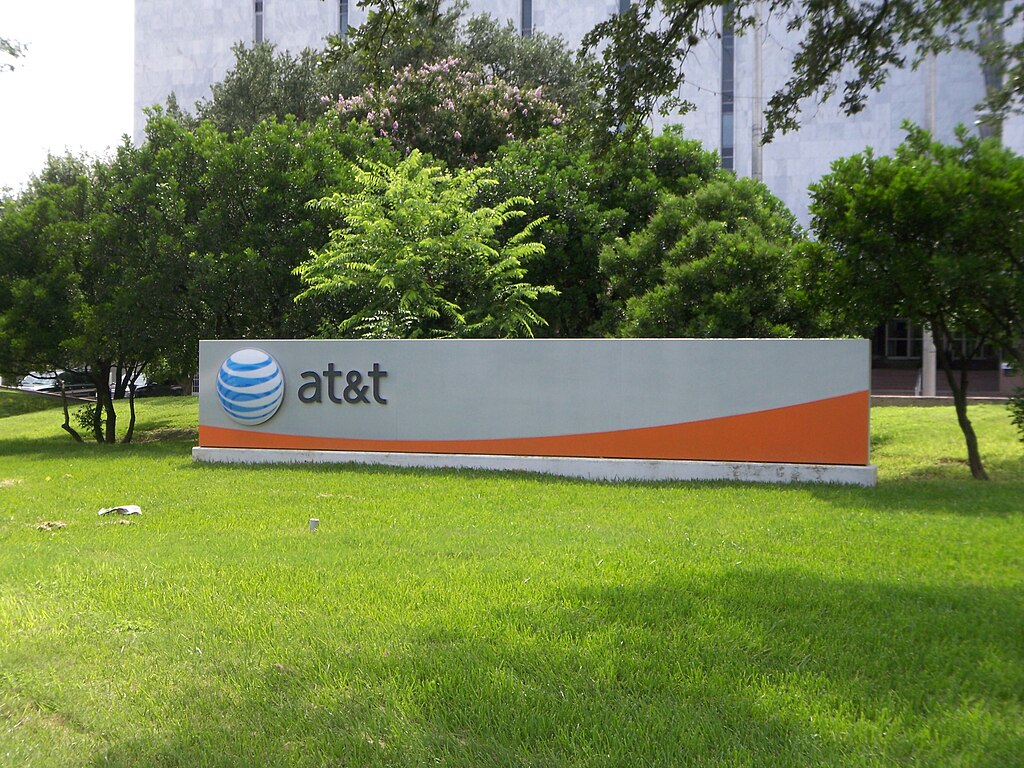
AT&T allowed us to conduct qualitative and quantitative research for them. The result was a key brand insight about the Worry Wort, a kind of subscriber who preferred AT&T over rivals Verizon and T-Mobile for a variety of reasons and tended to stick with AT&T for the long haul. The campaigns built around the Worry Wort allowed AT&T to reduce churn and fend off wireless competitors.
It’s doubtful that submitting the same data to AI would produce a finding as incisive as the Worry Wort. This is something to bear in mind if you’re a telecommunications brand seeking to thrive: human perspicacity counts.
There’s a kind of intelligence AI can’t reach. It has dimension, soul, and human inspiration. In the telecommunications business, we’d do well to remember this as we pour more datasets into the maw of AI. If you’re in the telecommmunications business and need human perspicacity, you might call Cascade Strategies. We can help you see things AI can’t see.
Featured Image: (Public Domain)
Top Image: Brownings at English Wikipedia

Sep

Pan Pacific Hotels allowed us to conduct qualitative and quantitative research for them. The result was a key brand insight about the Cosmopolite, a kind of guest who preferred Pan Pacific lodging even when other hotel offers were better. The campaigns built around the cosmopolite allowed Pan Pacific Hotels to weather economic downturns and pandemics, and even expand into key markets in Asia.
It’s doubtful that submitting the same data to AI would produce a finding as incisive as the Cosmopolite. This is something to bear in mind if you’re a hospitality brand seeking to thrive: human perspicacity counts.
There’s a kind of intelligence AI can’t reach. It has dimension, soul, and human inspiration. In the hospitality business, we’d do well to remember this as we pour more datasets into the maw of AI. If you’re in the hospitality business and need human perspicacity, you might call Cascade Strategies. We can help you see things AI can’t see.
Featured Image: Saksham Vikram
Top Image: Alix Lee
Jan
Curious About AI in Marketing? 7 Critical Questions
jerry9789 0 comments artificial intelligence, Burning Questions
Artificial Intelligence(AI) has recently been integrated into marketing and is still in its early stages. It makes automated decisions based on available data and audience observations or economic trends that impact marketing. By doing so, it enables marketers to gain more insight and understanding of their target audiences.
However, a business must comprehend how AI Marketing works and its effects before adopting it. Here are seven questions every company interested in AI Marketing should ask themselves.
Jun
Nowadays, it’s growing increasingly common for businesses to turn to neuroscience to address their marketing needs, especially since it seems that business has
 challenges only neuroscience can solve. Behaviorists will tell us that humans are irrational creatures—we often make decisions based on information that is incomplete. We also take mental shortcuts.
Why we err in the first place, however, is not completely explained by behavioral science or economics. However, neuroscience can really help us gain a foothold in understanding why and how consumers make certain decisions. Neuroscience adds value to business; it provides us with long sought after causal explanations for behavior. It also provides several methods that we can use to assess our unconscious mental processes.
May
The massive growth of big data, while heralding its success, can also be a bit of a hindrance to our industry. Simply put, there are too many posts, videos, and other data that do not fit the model of query we need. As a result, it’s time to do some big data market research and really think about new ways to store and analyze data.
What is “Big Data” anyway?
In the event you’re unfamiliar with the term, big data is, in short, business data and the technology required to uphold it. Currently, the amount of existing data grows hugely each day. All of this data, including social media networking data, is relevant to business, but as of right now, only a fraction of what’s out there is being effectively analyzed. Really, though, one of the best ways to conduct research and return relevant advertising to the market is through such analysis.






 info@cascadestrategies.com
 2032 Newport Way NW,
Issaquah, WA 98027 (425) 677-7430